

Future Trends in Pad Printing Technology
Key Takeaways
- Automation and digital integration are enhancing efficiency and reducing errors in pad printing processes.
- Eco-friendly inks and sustainable practices are becoming industry standards.
- Advancements in precision and functionality are expanding the applications of pad printing.
- Modular and customizable systems offer flexibility to meet diverse production needs.
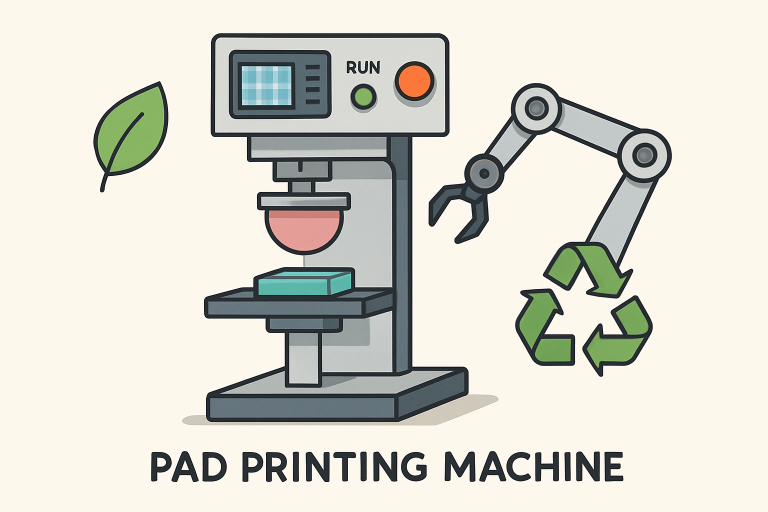
Pad printing technology stands at the crossroads of innovation, with breakthroughs in automation, precision, and environmental responsibility reshaping its trajectory. As industries seek more efficient and sustainable ways to personalize and brand products, understanding the latest trends in a pad printing machine becomes essential for global manufacturers and businesses alike.
Driven by shifts in digital integration and sustainability, companies that rely on pad printing are quickly adapting to smarter, greener production models. The ongoing quest for faster turnaround times, higher print accuracy, and reduced waste is propelling the adoption of high-tech solutions—transforming conventional workflows and opening new market opportunities.
Automation and Digital Integration
The move toward automation in the pad printing sector is accelerating as businesses embrace smart manufacturing. Contemporary systems are equipped with automated part handling, multi-color print heads, and controlled registration, which significantly reduces the potential for manual errors and enhances productivity. By connecting machinery with IoT sensors and smart controls, plant managers gain valuable insights and can schedule predictive maintenance, which reduces unplanned downtime and extends the life of capital equipment. These advancements not only foster consistency in output but also align with the broader Industry 4.0 movement, in which interconnected smart factories drive competitiveness.
Digital integration further enhances production agility, allowing operators to leverage platforms for remote monitoring and flexible line adjustments. For example, medical device and automotive manufacturers are leveraging pad printing machines capable of instant adjustments to accommodate short-run or custom orders.
Eco-Friendly Printing Solutions
The push for greener printing is reshaping equipment specifications and ink choices. Water-based and UV-curable ink technologies are gaining traction, offering manufacturers safer and more sustainable alternatives that do not compromise on vibrancy or durability. As government regulations, such as the EU’s RoHS and REACH directives, demand cleaner manufacturing, ink producers have reduced hazardous substances in their formulations by over 70%. Industry forecasts predict that by 2025, the eco-friendly pad printing ink market will surpass $2.5 billion, driven by increasing awareness and regulatory mandates.
Market research provided by Grand View Research highlights that this move toward sustainability isn’t just beneficial for compliance but also opens up new opportunities for brands seeking low-impact solutions for their customized goods.
Advancements in Precision and Functionality
As industries demand intricate product designs and flawless brand markings, the race to refine pad printing accuracy has intensified. Where machine standard tolerances once hovered around ±0.02mm, new developments are expected to drive this figure down to ±0.01mm by 2030. These improvements are of particular importance in high-stakes industries, such as electronics, aerospace, and medical devices, where detailed micro-printing can significantly impact product function or patient safety.
Emerging solutions are not limited to superior accuracy. Hybrid machines capable of integrating pad printing with inkjet or laser engraving are opening up opportunities for complex, multi-process jobs that can be performed on a single production line. This versatility is helping businesses launch innovative product formats while controlling costs and production timelines.
Modular and Customizable Systems
The demand for customization is driving a shift to modular pad printing equipment. Manufacturers can now build tailored equipment configurations by selecting from plug-and-play modules, such as additional print stations, automated curing units, or online quality monitoring cameras. This flexible approach reduces upgrade costs by up to 40% and enables manufacturers to respond quickly to changing project requirements or scaling volumes.
Investing in modular systems enables businesses to phase in new capabilities as production needs evolve, thereby optimizing resource allocation and equipment utilization for a more agile operation.
Challenges Facing the Pad Printing Industry
Despite advancements, several industry hurdles remain:
- Initial Investment and ROI: Automation comes at a steep price. Cutting-edge systems can cost between $100,000 and $300,000, a significant barrier for small companies. Extended ROI periods can deter investments in competitive markets with thin profit margins.
- High Barriers to Technological Innovation: Continued R&D spending on next-gen pad printing—such as servo-driven motors and advanced ink formulations—demands deep pockets. Globally, manufacturers are allocating more than 15% of their revenue to innovation efforts.
- Talent Shortage and Knowledge Transfer: Fast-paced innovation outpaces the supply of skilled operators, ink chemists, and automation programmers. This talent gap challenges the successful adoption of new pad printing technologies.
- Intense Market Competition: A rise in lower-cost machine exports, particularly from China, has intensified price competition, making it difficult for established players to maintain margins on basic models.
Conclusion
Automation, eco-friendly practices, precision advancements, and modularity mark the horizon for pad printing technology. Each trend broadens application possibilities and improves operating efficiencies, though not without bringing new challenges. Successful manufacturers will be those who prioritize adaptiveness, ongoing education, and investment in both technology and skilled personnel—ensuring a competitive and sustainable future in the ever-evolving world of pad printing.
