

How Often Is Too Often? Establishing an Accurate Schedule for Septic Tank Pumping
Fixed pumping dates can be useful reminders, but they do not tell the whole story inside a tank. Household size, tank capacity, water use, garbage disposal habits, and sludge depth shape how quickly solids accumulate. An accurate septic tank pumping schedule comes from watching those factors together instead of pumping too frequently or waiting for backups.
Tank Size Provides the First Piece of the Schedule
Capacity determines how much wastewater and settled material a tank can hold before working space becomes crowded. Smaller tanks serving busy households generally reach their pumping point sooner, while larger systems may allow longer intervals under moderate use.
Technicians compare tank volume with occupancy because the same 1,000-gallon tank can perform very differently for two residents than for six. One septic contractor in Huntsville AL can use that relationship as a starting point, then adjust the schedule using measured sludge, scum, and household habits.
Household Occupancy Changes the Rate of Buildup
Additional residents create more toilet waste, paper, laundry water, food residue, and flow through the system. Guests, multigenerational living, home businesses, or children returning from college can therefore shorten a maintenance interval even though nothing about the tank itself has changed.
Lifestyle shifts deserve attention between service visits because an old schedule may no longer fit current demand. Providers of septic tank service in Huntsville AL can review occupancy changes and previous pumping records to see whether solids are accumulating faster than they did in earlier years.
Water Habits Influence More Than Tank Volume
Heavy water use does not directly create sludge, but repeated surges can disturb settling and move suspended particles toward the outlet. Back-to-back laundry loads, leaking toilets, long showers, and frequent dishwasher cycles give wastewater less quiet time to separate before another large discharge arrives.
Spreading water use throughout the week helps the tank operate more steadily and protects the drain field from sudden hydraulic loading. Regular septic tank service can also identify leaks or unusually high liquid levels that make a household appear to need pumping more often than it actually does.
Sludge Measurements Replace Guesswork With Real Information
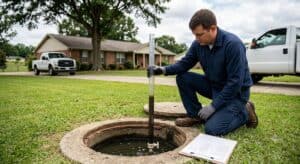
Professional crews can measure the settled sludge and floating scum before pumping begins. Those readings show how much usable space remains and whether solids are approaching the outlet, where they could escape into distribution pipes and eventually clog the soil absorption area.
Documented measurements become valuable after several visits because they reveal the property’s normal accumulation rate. Septic tank pumping services can use that history to refine future intervals instead of applying the same calendar recommendation to homes with different waste patterns.
Pumping Too Frequently Can Hide the Real Problem
Frequent pump-outs are not automatically harmful to a properly serviced tank, but needing them unusually often may signal another issue. Hidden leaks, an undersized tank, a clogged outlet filter, damaged baffles, groundwater entry, or drain field failure can make the system seem full sooner than expected.
Repeated emergencies call for diagnosis rather than another automatic appointment. Searches for septic companies near me should lead homeowners toward providers that inspect components and flow conditions, since septic tank pumping alone cannot correct a structural defect or saturated absorption field.
Service Records Make Future Timing More Accurate
Written records give technicians dates, tank volumes, sludge depths, repairs, filter cleanings, and notes about unusual conditions. Patterns across those entries can reveal whether maintenance intervals are appropriate or whether household use has gradually changed enough to justify a different schedule.
Local conditions also matter because seasonal rainfall and slower-draining soils can affect system performance even when solids remain within acceptable levels. Experienced septic contractors in Huntsville AL can separate a true pumping need from drainage problems that happen to produce similar symptoms, including slow fixtures or wet ground.
A Personalized Schedule Protects the System Without Overservicing
Practical scheduling combines inspection findings with tank size, occupancy, waste habits, component condition, and past accumulation rates. Homeowners seeking septic tank pumping in Huntsville AL or septic tank pumping services in Huntsville AL should expect recommendations based on those details rather than an arbitrary date that ignores how the property is actually used.
Cora Environmental provides septic tank service and pumping support for Huntsville-area properties, helping owners evaluate waste levels and maintenance history before setting future intervals. Their service can help determine whether a tank is genuinely due for pumping, whether a recurring problem needs closer inspection, or whether the existing schedule can safely remain unchanged.
