

The Property Damage Nobody Notices Until Construction Is Finished
Construction projects are often judged by what gets built.
The new extension is complete. The apartment tower is occupied. The retaining wall is finished. The excavation equipment has disappeared, and the project moves into the next phase.
Yet some of the most expensive consequences of construction are discovered only after the contractors have left the site.
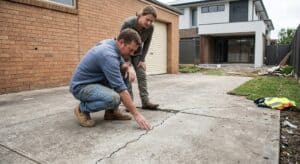
A hairline crack that wasn’t there six months ago. A garage door that suddenly sticks. Uneven paving. A boundary wall that has shifted almost imperceptibly. These changes often emerge gradually, making it difficult to determine whether they are part of a building’s natural ageing process or the result of nearby construction activity.
For property owners, developers, builders, and neighbours alike, this uncertainty creates one of construction’s most overlooked risks: proving what changed, when it changed, and why.
The challenge is not always the damage itself.
It is the absence of reliable evidence.
Construction Doesn’t Need to Touch Your Property to Affect It
Many people assume property damage only occurs when heavy machinery physically strikes a building.
In reality, neighbouring construction can influence surrounding properties in far subtler ways.
Deep excavation can alter soil conditions beneath adjoining land. Piling generates vibrations that travel through the ground. Temporary changes to drainage may affect moisture levels around existing foundations. Heavy vehicle movements place repeated stress on nearby infrastructure.
None of these activities automatically result in damage.
However, they can contribute to movement that becomes visible only weeks or months after construction has commenced.
This creates an important distinction.
Visible damage is often the final stage of a much longer process.
By the time cracks appear, the conditions that contributed to them may have existed for months.
Older Properties Respond Differently
Not every building reacts the same way to nearby construction.
An older brick home built decades ago behaves very differently from a recently constructed concrete townhouse.
Construction materials, foundation types, historical repairs, soil conditions, drainage, and previous structural movement all influence how a property responds to external forces.
One recurring observation among building professionals is that age alone rarely determines vulnerability.
Maintenance history often matters more.
A well-maintained century-old property may perform exceptionally well, while a much newer building with unresolved drainage issues or previous structural weaknesses may prove more susceptible to movement.
This is why assumptions based solely on a property’s age frequently lead to poor decisions.
The Most Expensive Disputes Are Often About Uncertainty
When neighbouring owners disagree about property damage, the conversation rarely begins with engineering.
It usually begins with uncertainty.
Was the crack already there?
Did the movement occur before excavation started?
Has this wall shifted recently, or has it looked like this for years?
Without reliable documentation, these questions become increasingly difficult to answer.
Both parties may genuinely believe they are correct.
Builders often maintain that pre-existing defects have simply become more noticeable.
Property owners may believe recent construction caused entirely new damage.
Neither position can be properly evaluated if nobody knows what the building looked like before work commenced.
This is where process becomes more valuable than opinion.
Documentation Is Often More Valuable Than Repairs
Construction professionals invest enormous effort in planning.
Schedules are reviewed.
Budgets are monitored.
Safety procedures are documented.
Environmental risks are assessed.
Ironically, the condition of neighbouring properties sometimes receives far less attention than these operational considerations.
Yet documenting existing conditions before construction begins is one of the simplest ways to reduce future disputes.
A professionally prepared dilapidation report establishes a clear visual record of a property’s condition before nearby works commence. Rather than relying on memory or assumptions months later, all parties have an objective baseline that can be referenced if concerns arise during or after construction.
Good documentation does not prevent movement.
It reduces uncertainty.
In many situations, that distinction proves invaluable.
Small Changes Can Create Large Financial Consequences
Not every defect requires major structural repairs.
However, relatively minor issues can still become expensive when responsibility is unclear.
A cracked driveway may require replacement.
A damaged retaining wall can involve engineering assessments.
Boundary fencing, paving, landscaping, and drainage systems may all require investigation if movement occurs nearby.
Insurance claims become more complex when timelines cannot be established.
Legal costs increase.
Project delays become more likely.
Relationships between neighbours often deteriorate.
One of construction’s less appreciated realities is this:
“The financial cost of uncertainty often exceeds the cost of the physical damage itself.”
Good Risk Management Begins Before Construction
Experienced developers rarely view risk management as something that happens after problems arise.
They focus on reducing uncertainty before work begins.
This applies across almost every aspect of construction.
Contract documentation.
Safety planning.
Environmental management.
Quality assurance.
Stakeholder communication.
Property condition documentation belongs within this broader philosophy.
It represents another layer of preparation rather than another administrative exercise.
Projects that invest in clarity early often spend far less time resolving disagreements later.
Communication Is an Underrated Project Tool
Neighbour concerns frequently arise long before construction begins.
Noise.
Access restrictions.
Parking.
Working hours.
Potential property damage.
Most construction professionals understand these concerns are normal.
What often determines whether issues escalate is not the technical problem itself but how expectations are managed.
Clear communication reduces speculation.
Providing realistic timelines helps neighbours prepare.
Explaining construction activities builds confidence.
Supporting these conversations with objective documentation strengthens trust between all parties.
Construction inevitably creates disruption.
It does not have to create conflict.
Prevention Is Usually Less Expensive Than Resolution
Every construction project carries some level of uncertainty.
Ground conditions differ.
Existing buildings behave differently.
Unexpected issues emerge.
The objective is not to eliminate every possible risk.
It is to ensure that avoidable uncertainty does not become avoidable conflict.
One consistent pattern across the construction industry is that businesses investing in preparation generally spend less time dealing with disputes after completion.
Preventative thinking rarely receives the same attention as problem solving.
Yet it often delivers far greater value.
Final Thoughts
Most people associate construction risk with budgets, delays, weather, or material shortages.
Less attention is given to the surrounding properties that continue to exist long after the project has finished.
Cracks, movement, drainage changes, and other forms of property damage do not always appear immediately, making accurate documentation increasingly important when questions arise months later.
For builders, developers, and neighbouring property owners alike, a professionally prepared dilapidation report is not simply another project document. It provides an objective record that helps separate existing conditions from genuine changes, reducing uncertainty and creating a stronger foundation for resolving concerns if they arise.
Because in construction, the hardest damage to resolve is often not the damage itself.
It is proving when it happened.
