

How To Choose An SUV That Fits City Streets, Family Trips, And Rough Roads
Key Takeaways
- Choose an SUV based on normal driving needs, passenger count, cargo, and parking conditions.
- Smaller SUVs are usually easier to maneuver and more efficient in crowded areas.
- Three-row models are most useful for regular carpools, larger families, and frequent long trips.
- All-wheel drive can add confidence on wet pavement and loose surfaces, but proper tires still matter.
- Ground clearance, suspension, tires, and underbody protection are important for rough roads.
- Safety, ownership costs, cargo usability, and test-drive comfort deserve as much attention as power.
Choosing an SUV that works well across different types of driving starts with understanding how you actually use your vehicle. City streets may call for easy maneuverability, practical dimensions, and good visibility, while family trips may prioritize passenger space, cargo capacity, and comfort. If your weekends include rough roads or outdoor destinations, you may also want to consider ground clearance, traction, and durable features. Balancing these needs can help you choose an SUV that feels practical for everyday life without limiting your travel plans.
It also helps to consider fuel costs, maintenance needs, safety features, and your overall budget before making a decision. Comparing different models and their capabilities can reveal which options best match your routine. If you are exploring SUVs and want to understand the available choices, learn more about features, capabilities, and considerations that can help guide your next vehicle decision.
Why One SUV May Need To Do Several Jobs
An SUV can serve several purposes, but not every capability needs to receive equal weight. Start by identifying how you spend most of your driving time and which needs occur only occasionally. Daily commuting, school runs, and errands may make maneuverability and comfort more important, while family vacations may increase the value of passenger and cargo space.
Consider how often you will actually use features such as extra seating, towing capacity, or enhanced traction. Paying for capabilities that rarely fit your routine may not make sense. Instead, look for a balance that supports your most common needs while still providing enough flexibility for weekend travel, outdoor activities, or changing family needs.
Start With Your Weekly Driving Routine
Before visiting a dealership, write down what a normal week looks like. This simple exercise prevents an emotional purchase based on a vehicle that is impressive in a showroom but inconvenient at home.
- Estimate how many miles you drive in town, on highways, and on unpaved roads.
- Count regular passengers, including children, pets, and carpool riders.
- List common cargo, such as groceries, strollers, tools, sports gear, luggage, or a dog crate.
- Consider garages, parking decks, narrow streets, steep driveways, and local weather.
- Decide whether towing, trail access, or deep snow is a genuine need rather than an occasional idea.
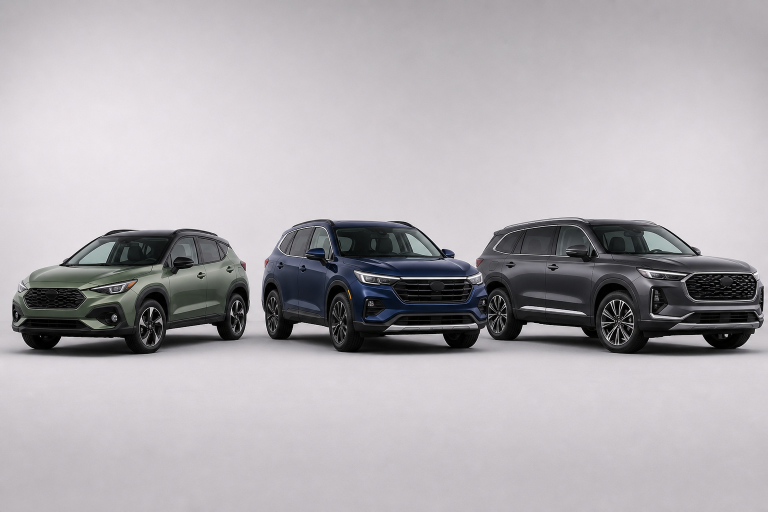
Pick The Right SUV Size
Subcompact SUVs
Subcompact SUVs fit drivers who value easy parking, low-speed maneuverability, and efficient commuting. They work well for smaller households and light cargo needs, but rear-seat comfort and luggage space can become limited on longer trips.
Compact SUVs
Compact SUVs are a practical middle ground. They typically provide usable rear-seat room and a flexible cargo area without feeling oversized in city traffic. For couples, small families, and drivers who take occasional road trips, this class often delivers the best balance.
Midsize SUVs
Midsize models bring more highway comfort, broader shoulders, and, in many cases, an available third row. They suit families that frequently carry passengers or vacation luggage, although fuel, tires, insurance, and maintenance can cost more than with smaller models.
Full-Size SUVs
Full-size SUVs make the most sense for large families, substantial cargo, and frequent towing. Their cabins can be excellent for long-distance travel, but buyers should confirm that the vehicle fits the garage, workplace parking area, and neighborhood streets before committing.
Compare City Manners With Rough-Road Ability
A capable SUV does not have to be harsh or cumbersome, but there are compromises. City drivers should prioritize outward visibility, responsive brakes, light steering, a tight turning circle, and cameras that make parking less stressful. Highway travelers should look for supportive seats, calm cabin noise, stable ride quality, and sufficient passing power at full load.
For uneven access roads, gravel, ruts, or muddy trailheads, focus on more than all-wheel drive. Ground clearance reduces the chance of scraping underneath, while tire sidewalls, suspension travel, drive modes, and underbody protection influence how confidently the vehicle handles rough terrain. A soft urban crossover may be ideal for pavement but less suitable for repeated off-road use.
Decide If All-Wheel Drive Is Worth It
All-wheel drive can improve traction when accelerating on rain-soaked pavement, gravel, grass, or uneven surfaces. It can be worthwhile in regions with frequent wet weather, snow, steep roads, or unpaved routes. However, it does not improve stopping distance on slippery pavement, and it cannot replace cautious driving or quality tires.
Compare the exact trim before assuming all-wheel drive is included. The extra hardware may raise the purchase price, slightly reduce fuel economy, and add service considerations. If most driving happens on dry, paved roads, a front-wheel-drive configuration may provide better value.
Look Beyond Horsepower
Horsepower helps describe performance, but daily usefulness comes from the complete driving package. Torque affects how an SUV moves with passengers, luggage, or a trailer. Transmission behavior matters in stop-and-go traffic, and suspension tuning determines whether the vehicle feels controlled or unsettled over broken pavement.
- Braking: Test pedal feel and confidence, especially in larger SUVs.
- Ride quality: Notice body movement, bumps, and rear-seat comfort.
- Towing: Match trailer weight, hitch equipment, and payload limits to the vehicle’s actual ratings.
- Tires: Check replacement cost and whether the fitted tires suit pavement, snow, or rough roads.
Check Safety Ratings And Driver Assistance
When reviewing crash-test results, ensure you check the specific model year and configuration, as equipment can vary by trim level or production date. Additionally, confirm whether features such as automatic emergency braking, blind-spot monitoring, lane-support systems, adaptive cruise control, and rear cross-traffic alerts are standard or available as options. Take some time to sit in the driver’s seat and test the cameras, warning tones, displays, and physical controls. While driver-assistance technology should be easy to understand, it is important to remember that it serves as a backup and should not replace an attentive driver.
Compare Fuel Economy With Real Driving Costs
Fuel economy should be evaluated alongside insurance, tires, routine service, registration, and expected annual mileage. Compare city, highway, and combined estimates for the exact drivetrain. The EPA fuel economy information can help clarify how official vehicle testing and window-sticker estimates are calculated.
Gas, hybrid, plug-in hybrid, and electric SUVs can all make sense in the right situation. A hybrid may benefit from frequent city driving, while a plug-in hybrid is most compelling when charging is convenient and daily trips fit its electric range. An electric SUV may be a strong option for drivers with reliable home charging and predictable travel patterns.
Measure Passenger And Cargo Space
Published cargo volume does not always show how useful the space feels. Bring child seats, a stroller, a golf bag, a cooler, or other bulky items to the test drive when possible. Check the rear opening, lift-over height, cargo floor shape, seat-folding process, and the space behind the third row. Adults should also spend time in every seating position, not just the driver’s seat.
Build A Smart Test-Drive Plan
- Drive through a parking lot to assess visibility, turning, and camera quality.
- Use city streets to evaluate low-speed response and ride comfort.
- Merge onto a highway to test acceleration, stability, and cabin noise.
- Travel over uneven pavement to feel how the suspension reacts.
- Park in a tight space and try loading cargo.
- Operate the climate controls, infotainment, seat adjustments, and driver-assistance settings yourself.
Final Checklist Before Choosing
Before signing, confirm that the SUV fits your usual parking spaces, carries your normal passengers and gear, and feels comfortable after more than a few minutes behind the wheel. Make sure the drivetrain matches local conditions, safety features are easy to use, and fuel and maintenance costs fit the budget. The smartest SUV is not necessarily the biggest or most powerful. It is the one that makes everyday driving, family travel, and occasional rough roads feel equally manageable.
