

How Insulated Sectional Doors Are Reshaping Energy Efficiency in Australian Warehouses
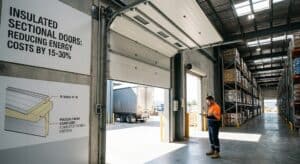
Rising energy costs and tighter environmental standards are pushing Australian warehouse operators to take a harder look at where they are losing efficiency. Door assemblies, often treated as an afterthought, are one of the most significant contributors to thermal waste.
Insulated sectional doors address this gap directly, offering measurable performance gains in facilities of all sizes. For anyone responsible for managing a warehouse, understanding what these systems actually deliver is well worth the time.
The Energy Challenge in Australian Warehouses
Warehouses are structurally difficult environments to keep thermally stable. High ceilings, frequent bay door cycles, and large open volumes all work against efficient climate control. In Australian conditions, where summer temperatures regularly reach extreme levels, the cost of maintaining internal temperature without proper building components rises quickly.
Door openings are a primary source of thermal transfer in any large facility. Each cycle lets conditioned air escape while external heat floods in. Across dozens of daily operations, that cumulative loss has a very real impact on energy bills.
Many facility operators have addressed this issue by specifying sectional doors built with high-performance insulation cores. These systems open vertically in stacked horizontal panels, keeping the door tight to the building envelope throughout the operating cycle. The insulated construction limits heat transfer whether the door is open or closed, making it one of the more reliable structural fixes available for energy loss.
How Insulation Ratings Affect Performance
Understanding R-Value and U-Value
Two metrics define how well an industrial door handles heat: R-value and U-value. R-value measures resistance to heat flow; a higher number means better insulation. U-value measures how quickly heat moves through the door; a lower number reflects stronger thermal performance.
Most insulated sectional doors are built with polyurethane foam injected between two steel skins. This construction consistently achieves higher R-values than single-skin or uninsulated alternatives. In cold storage environments or temperature-sensitive warehouses, even modest improvements to these ratings produce tangible reductions in refrigeration and air conditioning expenditure.
Panel Thickness and Material Choices
Thicker panels generally improve thermal performance, though weight and structural load need to be factored in. Commercial-grade insulated sectional doors commonly range from 40mm to 80mm in panel thickness. A steel exterior paired with a continuous polyurethane core is the most common configuration, balancing durability with insulation value. Double-skin steel with a full foam fill eliminates thermal bridging at the panel edges, which is where a lot of heat transfer occurs in lesser products.
Operational Benefits Beyond Thermal Performance
Reduced Wear on Climate Control Systems
A well-performing building envelope takes pressure off mechanical systems. Heating, ventilation, and air conditioning equipment runs fewer cycles when internal temperatures are easier to maintain. Over three to five years, that reduction in operational load can offset a meaningful share of the initial door installation cost through lower servicing and replacement frequency.
Noise Reduction in Mixed-Use Facilities
The foam core that provides thermal resistance also absorbs sound. For warehouses situated near residential areas, or those with offices sharing the same footprint, this feature is a practical secondary benefit. A hollow door transmits external noise freely; an insulated panel dampens it considerably.
Improved Door Seal Integrity
Sectional door systems are typically fitted with bottom seals, side contact seals, and header seals as standard. These close the gaps that flat-panel doors often leave behind. Combined with the insulated panel construction, total air infiltration drops substantially, which directly improves a building’s airtightness rating and reduces the strain on internal climate systems.
Industry Data Supporting the Shift
Research into commercial building performance consistently identifies door and window assemblies as significant contributors to energy loss. In warehouse settings, bay doors account for a disproportionate share of that figure given their size and frequency of use. Australian energy efficiency frameworks have increasingly treated building envelope components, including industrial doors, as priority upgrade areas. Facilities that switch to insulated sectional systems report energy reductions of 15 to 30 percent in temperature-controlled zones, depending on climate region and usage patterns.
Conclusion
Insulated sectional doors offer a grounded, well-supported path to reducing energy waste in Australian warehouses. The gains go beyond thermal performance, extending into lower equipment wear, better acoustics, and stronger seal integrity across the full door assembly.
For operators managing rising costs and growing compliance obligations, upgrading ageing door infrastructure is a practical decision with measurable returns. The technology is proven, the data supports it, and the financial case becomes stronger the longer a facility delays the switch.
