

IBC Containers: Everything You Need to Know About Buying and Using Them
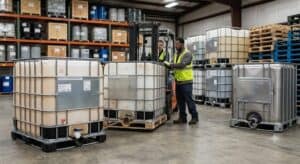
If your business stores or moves large amounts of liquid, there’s a good chance you’ve already come across IBC containers. They’re used everywhere from warehouses and farms to food production and chemical facilities because they’re easy to transport, simple to stack, and built for repeated use. Knowing which type of IBC container fits your operation can save money and make day-to-day handling a whole lot easier.
What Are IBC Containers?
IBC containers, short for Intermediate Bulk Containers, are large reusable containers built for storing and moving liquids, powders, and bulk materials. You’ll spot them in warehouses, manufacturing plants, farms, food facilities, and shipping yards across North America.
Most IBC containers hold between 275 and 330 gallons and sit on a pallet base for easy transport with forklifts or pallet jacks. Businesses like them because they store a lot of product without eating up extra floor space.
They’re also reusable, which helps companies cut costs compared to constantly buying new packaging.
Types of IBC Containers
Plastic IBC Totes
Plastic IBC containers are the most common style on the market. These usually have a plastic tank surrounded by a metal cage for protection and support. They’re widely used for water, oils, cleaning products, and agricultural liquids. Food-grade options are also available for businesses that need sanitary storage. Many companies choose plastic IBC totes because they’re lightweight, stackable, and easy to handle.
Metal and Composite IBC Containers
Metal IBC containers are built for heavier industrial use. Stainless steel models are common in chemical processing and manufacturing because they handle rough environments well.
Composite IBC containers combine multiple materials for added durability. These are often used when businesses need stronger protection during shipping or storage.
Common Uses Across Industries
Chemical and Hazardous Material Storage
Industrial companies use IBC containers to store chemicals, solvents, and hazardous liquids safely. Their enclosed design helps reduce leaks and spills during transportation.
Many facilities also prefer IBC containers because they stack neatly and help keep warehouses organized. That matters when space gets tight, and inventory starts piling up fast.
Food and Beverage Applications
Food and beverage companies use IBC containers for syrups, oils, sauces, juices, and liquid ingredients. Breweries and agricultural operations also rely on them for bulk liquid storage.
Businesses looking to shop IBC containers often choose reusable options because they lower packaging costs over time while still handling daily use well.
Important Specs to Understand Before Buying
Capacity is one of the first things buyers should check. The most common sizes are 275 and 330 gallons, though other sizes are available.
Material matters too. Plastic IBC containers work well for many general applications, while stainless steel containers fit tougher industrial environments.
Valve size and discharge fittings can also make a difference. The wrong setup can slow down filling or dispensing and create extra mess during operation.
If the containers will hold regulated materials, buyers should also look for UN-rated IBC containers that meet shipping and storage requirements.
New vs. Used IBC Containers: Pros and Cons
New IBC containers are popular with companies that need food-grade certification or want containers with zero prior use history. They usually come with a longer service life as well. Used IBC containers appeal to businesses trying to save money without sacrificing functionality. Many used containers still have years of usable life left in them.
Before buying used inventory, businesses should ask about the container’s previous contents and inspect the condition of the valve, frame, and inner tank.
For plenty of operations, buying used IBC containers hits the sweet spot between price and performance.
Save Money on Quality IBC Containers
Finding quality IBC containers at a fair price starts with buying from a marketplace that specializes in reusable industrial packaging. A good supplier should offer both new and used inventory along with clear product details and nationwide availability.
Container Exchanger helps businesses across North America buy and sell IBC containers, plastic pallets, wire baskets, metal bins, carts, and used Gaylord boxes. Whether you need a few containers or full truckload quantities, Container Exchanger makes it easier to find reusable packaging at a lower cost.
