

Mobile App UI Trends in 2026: Shaping the Future of User Experience
Table of Contents
- Minimalist Design with Bold Typography
- Augmented Reality (AR) Integration
- Dark Mode Preferences
- Interactive Storytelling
- Voice User Interface (VUI)
- Hyper-Personalization
- Neumorphism
- Accessibility Enhancements
- Conclusion
As mobile technology rapidly evolves, user expectations for digital experiences continue to rise. Creating engaging, intuitive, and accessible mobile applications relies heavily on modern user interface (UI) design. Understanding the emerging trends in mobile app UI design can help developers and designers deliver products that not only stand out visually but also offer superior functionality and user satisfaction. The latest shifts in aesthetics, technology integration, and personalization are setting new standards for mobile app development in 2026. Developers and designers are paying close attention to these trends, recognizing their impact on usability and retention. UI design is no longer just about appearance; it is centered on creating seamless, adaptive, and enjoyable user journeys. By staying aligned with current innovations and best practices, companies can ensure their apps remain relevant and loved by users in a crowded marketplace.
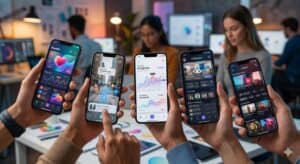
Minimalist Design with Bold Typography
The minimalist approach dominates 2026’s mobile interfaces, continuing a trend of stripping down unnecessary clutter. Simplicity in layout, abundant white space, and a focus on only the most essential elements help elevate both usability and visual elegance. In tandem, bold typography adds emphasis, provides an instant brand impression, and significantly improves legibility, especially on small screens. When combined, these elements allow users to interact with core features without confusion or distraction.
Augmented Reality (AR) Integration
AR technology is transforming app interactions by overlaying contextual information and guiding users seamlessly through both digital and physical spaces. Navigation applications now use AR to deliver live directions right onto real-world environments, making wayfinding in complex locations like airports or malls noticeably simpler. Retail, education, and entertainment apps are also leveraging AR to render more immersive and dynamic experiences, setting a new benchmark for engagement.
Dark Mode Preferences
Dark mode has gone from a novel feature to a mainstream necessity. Many users now expect the option due to its ability to minimize eye strain and extend device battery life. Properly executed dark mode interfaces require meticulous attention to color balance, text contrast, and readability. The result is a modern, attractive visual style that also supports user comfort, especially during nighttime app use. Developers are making dark mode the default option for many apps, responding directly to user feedback and changing device habits.
Interactive Storytelling
Beyond static displays, engaging users with interactive storytelling features has gained popularity. Apps employ short-form video stories and dynamic elements to bring content to life, turning passive consumption into active participation. This technique is particularly effective on media and entertainment platforms, increasing user retention and delivering information in more memorable ways. Such innovation ensures the app experience feels fresh and continually relevant to its audience.
Voice User Interface (VUI)
With voice technologies embedded in homes and personal devices, Voice User Interfaces are making mobile apps easier and more inclusive to use. Integrating advanced natural language processing, VUIs enable apps to process spoken commands and respond contextually, freeing users from traditional touch-based navigation. This improvement boosts accessibility and is especially beneficial for users who require hands-free interaction or have limited mobility.
Hyper-Personalization
Hyper-personalization is becoming a defining feature in app design, leveraging artificial intelligence and predictive analytics to adapt experiences to each individual. By analyzing behavior and preferences, apps can dynamically update content, layouts, and notifications to reflect what is most relevant for every user. The seamless fusion of data-driven insights with intuitive design principles leads to greater engagement, loyalty, and satisfaction.
Neumorphism
Neumorphism blends elements from skeuomorphism and flat design to create soft, almost tangible interfaces. Using gentle shadows, highlights, and subtle gradients, it delivers a three-dimensional effect that encourages users to interact with virtual objects as if they are real. This visual technique not only enhances aesthetic appeal but also provides a heightened sense of control and feedback, helping users feel more connected to the app’s core functions.
Accessibility Enhancements
Enabling access for all users remains a critical priority for UI design in 2026. Apps are incorporating advanced accessibility features, such as voice control, customizable display settings, and comprehensive support for assistive devices. These enhancements help ensure that users with varying abilities can interact with apps confidently and efficiently. Making accessibility a core part of the design process benefits not only those with disabilities but all users by enabling more flexible, adaptive interactions.
Conclusion
In summary, 2026’s leading mobile app UI trends focus on clarity, interaction, individualized experiences, and universal access. By embracing these principles, designers and developers can create products that not only meet but exceed the expectations of today’s mobile-savvy users. Features such as personalized interfaces, intuitive navigation, microinteractions, dark mode optimization, and accessibility-first design help deliver more engaging and inclusive experiences. As user preferences and technologies continue to evolve, staying current with emerging design practices is essential for maintaining relevance and competitiveness. Ultimately, successful mobile app design is about creating seamless, enjoyable, and efficient experiences that encourage user satisfaction, increase retention, and foster long-term loyalty. Organizations that prioritize user-centered design will be better positioned to adapt to future trends and meet the growing demands of an increasingly digital world.
