

Sustainable Landscaping Trends for Modern Yards
Table of Contents
- Introduction
- Incorporating Native and Drought-Tolerant Plants
- Efficient Water Management Techniques
- Reducing Lawn Areas with Alternatives
- Creating Pollinator-Friendly Gardens
- Utilizing Sustainable Hardscaping Materials
- Integrating Edible Landscaping
- Implementing Smart Landscaping Technology
- Embracing Minimalist Design
More homeowners are turning to sustainable landscaping as they seek modern ways to care for their outdoor spaces. As concerns about the environment grow, people are seeking landscaping solutions that are both beautiful and environmentally responsible. By working with a trusted landscaping company Keller, it is easier than ever to incorporate eco-friendly features into your yard while enjoying a stylish, low-maintenance landscape.
Eco-conscious landscaping not only creates healthier environments for people, pets, and wildlife but also conserves resources like water and energy. The following sustainable landscaping trends are helping homeowners shape modern yards that minimize waste and promote biodiversity without sacrificing curb appeal. Whether you choose drought-tolerant plants or smart technology, there are many ways to align your yard design with the future of green living.
With each strategy discussed below, today’s landscape designs emphasize functionality, ecological value, and sustainability, moving beyond traditional lawns toward vibrant, purposeful spaces. Prioritizing these techniques can support healthier communities, conserve natural resources, and create stunning outdoor retreats you will love for years to come.
Incorporating Native and Drought-Tolerant Plants
Sustainable landscaping begins with plant selection. Native and drought-tolerant plants thrive in your local climate with little intervention, so they need less supplemental water and fertilizer. Species such as agave, cacti, or indigenous grasses fit particularly well in arid regions and are vital in the trend toward desert modernism, which emphasizes simple yet future-ready gardens. These low-maintenance plants create colorful, textured, and resilient spaces that adapt to varying weather patterns, support local wildlife, and naturally resist common pests.
Efficient Water Management Techniques
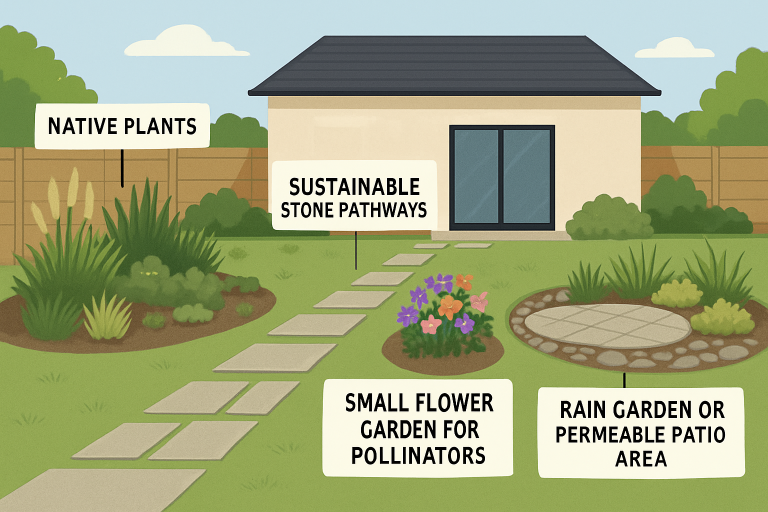
Water is one of our most valuable resources. Homeowners now embrace rain gardens, permeable paving, and drip irrigation to conserve and manage water more efficiently. Permeable pavers allow rainwater to soak into the ground, reducing harmful runoff and replenishing underground aquifers. Drip irrigation delivers water directly to plant roots, slashing waste and supporting healthy growth with less evaporation. These systems can be automated for added convenience, making them particularly beneficial during droughts and helping create resilient landscapes that are both attractive and sustainable. To explore the importance of water wisdom in landscaping, visit the EPA’s guide on landscaping tips.
Reducing Lawn Areas with Alternatives
Large, manicured lawns are rapidly falling out of favor as more sustainable alternatives take their place. Replacing grass with clover, moss, or native ground covers significantly reduces water consumption, fertilizer use, and maintenance time. Meadow gardens filled with wildflowers, ornamental grasses, or xeriscaping (designing spaces that require minimal irrigation) provide a colorful, habitat-rich alternative. These approaches create habitat for local wildlife and support pollinators while reducing chemical and noise pollution.
Creating Pollinator-Friendly Gardens
Pollinators are essential to thriving ecosystems, and creating spaces that welcome bees, butterflies, and hummingbirds helps preserve these vital species. Design your garden with a variety of flowering plants that bloom from spring through fall so pollinators always have a source of nectar and pollen. Avoiding pesticides and providing water sources further enhances your garden’s value as a pollinator haven. Not only do these gardens benefit local biodiversity, but they also add vibrant color and lively activity to your yard.
Utilizing Sustainable Hardscaping Materials
Choosing earth-friendly hardscaping materials can significantly reduce your yard’s environmental footprint. Select options such as reclaimed wood, permeable concrete, or natural stone for walkways, patios, and retaining walls. These materials blend seamlessly into the landscape and last for many years, making them a smart investment for both style and sustainability. Trends now favor warm earth tones and natural textures over artificial finishes, delivering spaces that feel timeless and grounded.
Integrating Edible Landscaping
Edible landscaping is a practical, rewarding way to make the most of your yard. By incorporating fruit trees, berry bushes, vegetables, and herbs, you combine beauty with function and reduce dependence on store-bought produce. Techniques such as espaliering fruit trees along fences or using strawberries as ground cover can maximize small spaces. Integrating edibles into ornamental beds lets you enjoy fresh, homegrown food while enhancing your landscape.
Implementing Smart Landscaping Technology
Tech-savvy homeowners are turning to digital solutions for enhanced sustainability. Smart irrigation systems monitor soil moisture and weather conditions, adjusting watering schedules to avoid overwatering or runoff. Advanced robotic lawn mowers can be programmed to mow selectively, preserving native flowers and promoting biodiversity in your yard. Technology makes it easier to balance environmental care with the convenience of modern living, helping homeowners fine-tune their landscapes for maximum efficiency and health with minimum hassle.
Embracing Minimalist Design
Minimalist design is quickly becoming a preferred approach for sustainable yards. By prioritizing quality over quantity, you can enjoy a space that feels organized, calming, and easy to maintain. Minimalism often means using a select palette of plants, clean lines, and open areas that invite relaxation. Muted colors and geometric patterns allow natural textures and the surrounding environment to take center stage, delivering a look that is both modern and enduring.
Adopting sustainable landscaping trends will help you build a modern yard that is attractive, responsible, and uniquely your own. Not only do these practices support biodiversity, conserve resources, and foster a healthier community, but they also deliver a personal sanctuary that reflects your values and connection to nature.
