

The Hidden Physics of Lifting Two Tons with a Twist
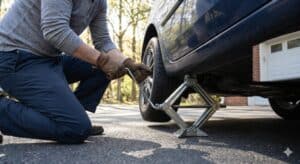
You’re standing beside a car that suddenly feels heavier than its sticker ever admitted. Maybe it’s a flat tire on a dark shoulder. Maybe it’s a squeaky brake job in your driveway with the neighbors watching. Either way, you’re about to do something that sounds almost mythical: lift two tons with a twist of your wrist.
And you can. You really can.
Not because you’re secretly superhuman—but because physics is. The quiet magic lives inside leverage, gears, pressure, friction, and the way a simple tool turns your small effort into a huge upward push. This guide walks you through the hidden physics behind that moment, so when you reach for car jacks, you’re not just “cranking.” You’re commanding forces.
Start With the Real Secret: Mechanical Advantage
If you’ve ever thought, “There’s no way this little handle should lift that much,” you’re already sensing the punchline: you’re not lifting the car directly. You’re trading distance for force.
That trade is mechanical advantage—one of physics’ most generous bargains.
Here’s the core idea you can feel in your hands:
– You apply a modest force over a long distance (turning a handle through many rotations).
– The jack converts that into a large force over a short distance (the car rising a few inches).
That’s why the action feels repetitive. That’s why it takes time. The tool is patiently “collecting” your small efforts and stacking them into something powerful.
This is also why technique matters. A smooth, steady rhythm beats a panicked sprint every time. Physics rewards consistency, not desperation.
—
Why car jacks Feel Like “Cheating” (But Aren’t)
A good tool can make you emotional if you’re having a rough day. That might sound dramatic—until you’ve been stuck on the side of the road at night, trying to keep your hands steady while trucks roar past.
There’s a word for the kind of sympathy someone offers when you’re in that situation: *commiserative*. Years ago, a friend once showed up with coffee during a roadside tire change—not to “fix it,” but to stand there and be quietly, wonderfully commiserative. It didn’t reduce the torque needed, but it reduced the weight in the chest. And honestly? When you’re using car jacks, you’re not just lifting metal. You’re lifting stress.
Still, the physics stays beautifully objective:
– The jack doesn’t remove the load.
– It redirects and multiplies your effort.
– It relies on geometry and controlled motion to keep things stable.
That’s why this guide isn’t about “strength.” It’s about understanding.
—
The Two Big Families: trolley car jack vs. Screw Designs
You’ll run into a couple common styles. Each one hides a different physics trick.
Hydraulic jacks (like the trolley car jack)
Hydraulic jacks use fluid pressure. You pump a handle, and fluid moves into a cylinder. Pressure builds. The lifting arm rises.
The physics principle is Pascal’s Law: pressure applied to a confined fluid is transmitted equally in all directions. What matters is the area of the pistons:
– Small piston: you apply force here.
– Large piston: the jack outputs a much larger force here.
You don’t get something for nothing—you usually pump through many strokes—but you get a force multiplication that feels almost unreal.
Screw jacks
Screw jacks use a threaded rod. You turn a handle, and the screw climbs through a nut (or vice versa). The thread’s slope is the star of the show. A gentle slope means you travel farther around the circle to move upward a tiny bit—again, distance traded for force.
The magic is in the helix. Every rotation is like pushing up a ramp wrapped around a cylinder.
—
The Twist That Changes Everything: Torque, Threads, and Friction
That “twist” you feel in your wrist is torque: a turning force.
Torque depends on two main things:
– How hard you push
– How long the handle is (the lever arm)
Longer handle = more torque with the same effort. That’s why those handles aren’t short and cute. They’re long and practical. They’re physics made ergonomic.
But friction is the hidden character in the story—sometimes a hero, sometimes a villain.
– In screw jacks, friction prevents back-driving (the car dropping when you let go).
– But too much friction means you fight the tool.
– Too little friction in the wrong place can mean slipping—dangerous slipping.
This is why lubrication, maintenance, and clean contact surfaces matter. You’re not being picky. You’re managing friction like an engineer.
—
Discern the Safe Setup: Where You Place the Jack Matters More Than You Think
There’s a moment—usually right before lifting—when you pause and try to *discern* whether everything is actually aligned. That word matters. Discern isn’t “guess.” It’s not “hope.” It’s that focused, slightly tense clarity where you notice the jack is a hair off-center, or the ground isn’t as flat as it looked.
A mechanic once taught a simple trick: step back and look at the car-jack from multiple angles before committing. That habit came from watching someone fail to discern a subtle slope in the pavement—nothing dramatic, just a slow lean that turned into panic. You don’t want panic. You want certainty.
When setting up car jacks, you want:
– Flat, solid ground (not soft dirt, not sloped asphalt)
– Proper jack points (manufacturer-recommended lift points)
– Wheels chocked (so the car can’t roll)
– Hands clear of pinch zones
Physics doesn’t care if you’re in a hurry. It only cares about forces and surfaces.
—
How car jacks Turn Tiny Motions into Inches of Lift
When the car rises, it rarely rises fast. That’s a feature, not a flaw.
Small increments create control.
Whether you’re pumping a hydraulic system or turning a screw, the jack is metering your input. It’s converting repeated small actions into precise height adjustments. That’s also why you should avoid sudden movements:
– Sudden pushes can shift the load
– Shifts create side loads
– Side loads can make a jack unstable
The tool is designed for vertical force. You want the load to go up and down—clean and straight.
And here’s the emotional truth: when you feel the weight transfer—when the tire finally clears the ground—you feel relief in your ribs. You did it. Not by brute force. By cooperation with physics.
