

Triangle ABA in Chapel Hill, NC: A Guide for Families Comparing ABA Therapy Options
Key Takeaways
- Families can compare ABA providers by treatment setting, clinical oversight, therapy hours, staff consistency, parent training, and insurance support.
- Triangle ABA serves Chapel Hill families through its Raleigh clinic and describes its model as structured, clinic-based, and data-driven.
- Individualized goals should focus on practical skills that matter to the child and family, including communication, daily routines, social interaction, and independence.
- Parent involvement can help children practice useful skills across home, school, and community settings.
- A consultation and insurance verification process can help families understand whether a program is an appropriate fit.
Choosing ABA therapy can feel like a major decision, especially when families are balancing clinical needs, travel time, insurance questions, and school planning. Triangle ABA in Chapel Hill, NC offers Chapel Hill and Orange County families access to clinic-based services at its Raleigh location.
Rather than comparing providers by distance alone, it is helpful to look at how therapy is delivered, how goals are selected, how progress is reviewed, and how caregivers are involved. Triangle ABA states that its Chapel Hill program provides at least 15 hours of clinic-based ABA therapy per week, along with data collection, parent support, and school-readiness services.
What Should Families Look for in an ABA Provider?
Every child and family has different priorities. One family may need help with communication and daily routines, while another may be preparing for a preschool or kindergarten transition. A useful provider comparison starts with clear questions rather than broad promises about outcomes.
Families may want to ask each provider:
- Where will therapy take place, and what does the setting look like?
- How many therapy hours may be recommended or available each week?
- How are goals chosen, reviewed, and adjusted?
- How often does a Board Certified Behavior Analyst oversee treatment?
- How does the provider support continuity if a staff member is absent or changes roles?
- What parent training or caregiver coaching is included?
- Will the intake team help verify insurance coverage and authorization requirements?
Triangle ABA identifies itself as clinician-owned and family-operated, and it states that it was founded by a BCBA who is also a parent of a child with autism. Its Chapel Hill service information also reports BHCOE accreditation and staff retention above 90 percent. Families can use these details as part of a broader comparison with other providers they are considering.
How Does Triangle ABA’s Clinic-Based Model Work?
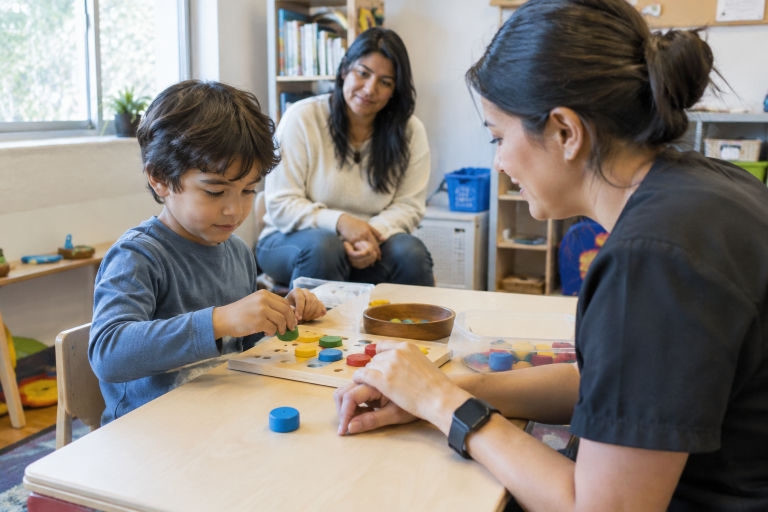
Clinic-based therapy provides a consistent environment in which a child can work one-on-one with a therapy team toward individualized goals. A structured setting may be helpful for practicing skills with planned materials, routines, and opportunities to build on success over time.
Individualized Assessment and Goal Setting
Triangle ABA describes beginning with an assessment of the child’s skills, needs, and family priorities. Goals can address functional communication, play, social participation, self-care, flexibility, coping strategies, and independence. The right goals are specific enough to measure and meaningful enough to use in daily life.
Data and Clinical Review
Session data can help a clinical team evaluate whether a strategy is helping, whether a goal should change, and which skills need more practice. Data should support informed treatment decisions, not replace family input. Caregivers should feel comfortable asking how progress is measured and how often goals are reviewed.
Which Services Are Available to Chapel Hill Families?
Triangle ABA lists several services for families in Chapel Hill and Orange County at its Raleigh clinic. These services can work together when they are appropriate for the child’s needs.
- Personalized ABA therapy: Individualized programming for skill development, communication, behavior support, and greater independence.
- Diagnostics and assessments: Evaluations that may help families understand developmental needs and plan next steps.
- School-readiness programming: Support for routines, peer interaction, transitions, following directions, and self-regulation.
- Parent ABA training and support: Coaching designed to help caregivers understand strategies and apply them during everyday routines.
- Behavioral assessment: A process for identifying patterns, possible triggers, and the purpose a behavior may serve.
- Occupational therapy: A related service that may address functional participation and developmental needs when clinically appropriate.
What Should Families Know About Autism Support?
Autism is a developmental disability that can affect social communication and behavior, but each autistic person has a different profile of strengths, preferences, and support needs. The CDC’s autism data and statistics report that about 1 in 31 eight-year-old children in the 2022 ADDM Network monitoring data had been identified with autism spectrum disorder. That figure reflects monitored communities, not a local estimate for Chapel Hill.
Families should be cautious about any provider that guarantees a particular result. ABA programs differ in setting, intensity, supervision, teaching strategies, and the goals they prioritize. A thoughtful plan should respect the child’s well-being, build functional skills, and use regular review to determine whether services remain helpful.
How Can ABA Support School Readiness?
School readiness is more than academic preparation. Children may benefit from practicing routines that make classroom participation more manageable and comfortable. Triangle ABA’s school-readiness program can be tailored to the child’s upcoming environment and current skills.
Examples of School-Readiness Goals
- Following one-step and multi-step directions.
- Moving between activities with fewer prompts.
- Waiting, taking turns, and participating in small-group activities.
- Communicating needs, choices, and requests in a functional way.
- Building coping and self-regulation skills.
- Increasing independence with classroom routines and self-care tasks.
Why Does Parent Training Matter?
Children use skills in more places when caregivers understand how to recognize, encourage, and practice them outside of therapy. Parent training can help families connect clinic goals to meals, getting dressed, playtime, errands, bedtime, and other everyday routines.
Caregivers may review treatment goals, learn how reinforcement is used, discuss how to respond consistently to challenging behavior, and ask questions about progress data. This collaboration helps ensure that treatment remains connected to the family’s real priorities.
How Can Chapel Hill Families Get Started With Triangle ABA?
- Request a consultation: Share the child’s age, current services, diagnosis status if applicable, and primary concerns.
- Discuss insurance: Triangle ABA states that its intake team verifies coverage and handles authorization steps before the first session.
- Complete assessment steps: Clinical information helps identify whether services are appropriate and what goals may be useful.
- Develop a treatment plan: The team and family can establish measurable priorities based on the child’s needs.
- Review progress regularly: Ongoing data and caregiver feedback can guide adjustments over time.
For Chapel Hill families, the best ABA choice is one that offers a clear clinical approach, respectful family partnership, and goals that matter in everyday life. A consultation with Triangle ABA can provide a practical opportunity to ask questions about availability, insurance, clinic-based care, and whether its services fit the child’s needs.
