

Essential Maintenance Strategies for Heavy Machinery
In the industrial sector, time is a currency that trades at a premium. For site managers and business owners, the sound of silence on a production floor or a construction site is rarely peaceful. Instead, it signals a halt in operations, mounting costs, and the looming headache of unscheduled repairs. Minimising downtime is not just about keeping machines running; it is about protecting the bottom line and ensuring the safety of the workforce.
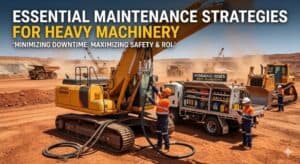
While total elimination of downtime is impossible, significant reductions can be achieved through strategic planning and a shift from reactive to proactive maintenance. By understanding the true cost of failure and investing in quality supply chains, businesses can transform maintenance from a necessary evil into a competitive advantage. This is especially true in the harsh Australian climate, where equipment faces extreme heat and dust daily.
The True Cost of Operational Stoppages
When heavy machinery fails, the immediate cost of the repair is often just the tip of the iceberg. The indirect costs frequently dwarf the price of parts and labour. These include missed deadlines, potential contract penalties, overtime wages to catch up on lost work, and reputational damage that could affect future tender opportunities.
However, the implications extend beyond finances. There is a profound safety dimension to equipment health. Neglected machinery is unpredictable, and unpredictability in an industrial setting is a recipe for disaster. According to WorkSafe WA, managing the risks associated with “plant” (machinery and equipment) is a fundamental duty for employers. This reality makes rigorous maintenance not merely a strategy for efficiency, but a critical legal and ethical obligation for every business owner. Ensuring that safety guards, emergency stops, and hydraulic systems are functioning correctly is the first line of defence against workplace accidents.
Strengthening the Supply Chain
One of the most common causes of extended downtime is not the repair itself, but the wait for parts. A robust maintenance strategy relies heavily on a dependable supply chain. When a critical component fails, the speed at which it can be replaced determines the duration of the outage.
This is particularly relevant in resource-rich regions like Western Australia, where operations are often remote and conditions are unforgiving. Operators in these areas must know exactly where to source durable components that meet Australian standards. For example, when an excavator or drill rig blows a line, having immediate access to the high-quality hydraulic hoses Perth suppliers provide can make the difference between a two-hour delay and a two-day shutdown. Establishing relationships with local specialists who understand the specific environmental challenges, such as heat, dust, and vibration, ensures that the replacement parts are not just available but fit for purpose.
Lessons from Specialised Heavy Industries
Different sectors approach maintenance with varying degrees of rigour, but the construction and heavy lifting industries offer valuable lessons in reliability. In these fields, the equipment is the business; if the crane doesn’t lift, the project freezes.
We can see this principle in action when looking at broader business efficiency models. As often highlighted in Sitashri’s business articles, operational resilience is integral to project success. In high-stakes work, well-maintained machinery is non-negotiable because the risks associated with failure allow for zero margin of error. Just as reliable cranes are vital for keeping construction timelines on track, keeping hydraulic systems and engines functional is key for mining, logistics, and manufacturing operations. The mindset used in heavy lifting, where every cable and pulley is inspected before a load is raised, should be adopted across all industrial sectors.
Implementing a Proactive Maintenance Schedule
Moving from a “fix it when it breaks” mentality to a preventive maintenance schedule requires a cultural shift within the organisation. It involves empowering operators to report minor issues before they become catastrophic failures.
To build a resilient maintenance culture, consider implementing the following steps:
- Daily Pre-Start Checks: Operators should perform visual inspections for leaks, wear, and loose fittings before starting any machinery. This simple habit catches issues early.
- Fluid Analysis: Regular sampling of oil, coolant, and hydraulic fluids can reveal internal wear or contamination long before a breakdown occurs, allowing for planned intervention.
- Scheduled Replacement of Wear Parts: Do not wait for hoses, belts, or filters to fail. Replace them at specific intervals based on hours of operation to maintain peak performance.
- Data Tracking: Use maintenance software or simple logs to track the history of each machine. Recurring issues often point to a deeper root cause that needs addressing.
- Comprehensive Training: Ensure that all staff understand the mechanics of the equipment they operate. A knowledgeable operator is the best early warning system a business can have.
The Long-Term ROI of Reliability
Investing in maintenance is often viewed as a cost, but it is effectively an insurance policy for productivity. A machine that runs efficiently uses less fuel, produces higher quality output, and has a longer lifespan. By prioritising safety through compliance with standards, securing a reliable supply chain for critical parts, and learning from high-stakes industries like construction, businesses can insulate themselves against the shocks of unexpected downtime. In the heavy industry game, reliability is the ultimate driver of profitability.
