

How Integrated Finance Tools Can Transform Business Operations
Key Takeaways
- Integrated finance tools provide comprehensive control by consolidating the full spectrum of financial processes into a single platform.
- Automation features dramatically reduce the risk of manual errors and the time spent on repetitive administrative tasks.
- Access to real-time data enhances accuracy and agility in both daily operations and long-term strategic planning decisions.
- Standardized digital processes enable stronger compliance and more robust risk management practices.
- Operational synergy and substantial cost savings enable various departments to collaborate smoothly, dismantling traditional information silos.
Table of Contents
- Enhancing Efficiency Through Automation
- Real-Time Data for Informed Decision-Making
- Strengthening Compliance and Risk Management
- Cost Savings and Operational Synergy
- Implementing Integrated Finance Tools
- Conclusion
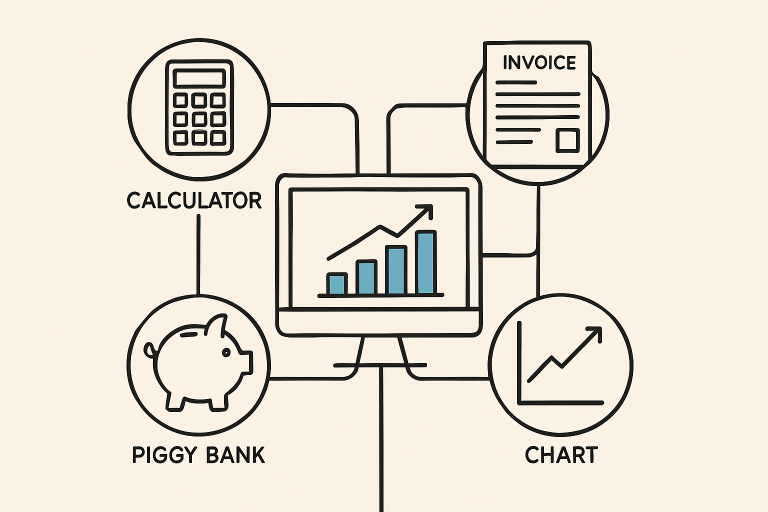
As the pace of business accelerates and competition intensifies across industries, organizations must adopt smarter, more agile solutions to stay ahead of the curve. Integrated finance tools have emerged as some of the most potent and effective ways for businesses to streamline their processes and substantially improve performance. By bringing together core financial functions—including accounting, invoicing, payroll, forecasting, and cash management—on a unified and user-friendly platform, these systems enable companies to gain a holistic view of their financial health while tightening internal controls and boosting operational efficiency. For businesses searching for the best business bank account to pair with their finance toolkit, the advantages multiply even further, supporting smoother cash flow, rapid reconciliation, and strategic financial agility in an ever-changing marketplace.
Whether you’re a CFO seeking more accurate, data-driven answers or an operations manager looking to cut down on the heavy burden of manual workloads, the transformative promise of integrated finance tools is hard to ignore. These solutions enable organizations to move beyond disconnected spreadsheets, ad hoc workarounds, and disparate legacy systems, providing a single, accessible source of financial truth. With in-platform automation, real-time reporting, and collaborative features that foster better teamwork, companies can accelerate decision-making, reduce operational costs, and elevate compliance standards—all while freeing up more time and energy for high-value strategic work that drives business growth and resilience.
Enhancing Efficiency Through Automation
Modern finance teams face challenges with repetitive administrative tasks, such as invoicing and payroll, which are often error-prone and time-consuming. Integrated finance platforms automate these processes, reducing human error and improving efficiency, with productivity gains of 40-50% reported in areas such as financial reporting. Beyond speed and accuracy, automation frees skilled staff for strategic tasks, such as data analysis and financial modeling, leading to greater overall organizational transformation and enhanced productivity of finance teams.
Real-Time Data for Informed Decision-Making
Timely access to accurate financial data is crucial for effective organizational management. Integrated finance tools aggregate business data, enabling real-time monitoring of cash flow, revenue, expenses, and key performance indicators. Customizable dashboards allow decision-makers to respond swiftly to risks and opportunities, facilitating corrective actions and enhancing forecasting and resource allocation. This immediate visibility supports competitiveness and innovation in dynamic markets while fostering confident, evidence-based leadership.
Strengthening Compliance and Risk Management
Compliance is a growing challenge for today’s businesses, particularly as they operate across borders and must respond to increasingly complex regulatory requirements. Integrated finance systems address these obstacles by embedding standardized digital workflows, built-in controls, and comprehensive audit trails that capture every transaction and approval. Automated, rule-based approval processes ensure consistent application of accounting standards and company policies, drastically lowering the risk of inconsistencies or mistakes. Financial leaders cite reduced risks of fraud, fewer regulatory violations, and stronger readiness for both internal and third-party audits as some of the most important benefits of adopting these platforms. By keeping compliance and risk management centralized and visible, these systems enable organizations to anticipate changes in laws, quickly adapt procedures, and foster a culture of accountability and transparency that protects both assets and reputation.
Cost Savings and Operational Synergy
One of the most compelling reasons for businesses to implement integrated finance tools is their ability to achieve substantial and quantifiable cost reductions. Automated workflows slash the time and money spent on manual data entry, redundant procedures, and error correction, while also virtually eliminating costly mistakes that can lead to compliance fines or wasted resources. Even beyond the direct cost savings in labor, working from a unified, real-time source of financial truth breaks down longstanding silos between departments—connecting finance, sales, operations, procurement, and human resources in a shared, collaborative work environment. This alignment fosters more effective communication, clearer strategic priorities, and faster consensus on multi-departmental initiatives. The upshot is not just operational synergy, but measurable efficiency gains and savings that translate directly to a healthier bottom line.
Implementing Integrated Finance Tools
Adopting a robust integrated finance platform should be approached as a strategic business transformation rather than a mere technology upgrade. Organizations must begin by conducting a thorough review of their current financial processes, pinpointing inefficiencies and identifying the areas for highest impact improvement. The next crucial step involves selecting a solution that aligns with their present needs, future growth plans, and employee workflows. Comprehensive training programs and open, ongoing communication are key to ensuring a smooth onboarding process and user adoption. Stakeholders from across departments should be engaged early and often to build buy-in and reduce resistance to change. By deploying thoughtful change management strategies and continuously tracking progress, companies can maximize their return on investment and quickly realize the benefits of a more agile, data-driven financial function. With the proper preparation and commitment, transformation can be both seamless and sustainable.
Conclusion
Integrated finance tools truly represent the next evolution in financial management, empowering businesses with automation, real-time insights, and robust compliance controls. These systems don’t just enable cost savings and better adherence to regulations—they foster a work environment where finance becomes a proactive partner in company strategy, innovation, and competitive growth. In a business landscape where rapid decision-making and financial visibility have never been more crucial, organizations that adopt integrated finance solutions will be well-positioned to thrive, adapt, and lead in their industries for years to come.
