

How to Track Your Trades and Improve Performance
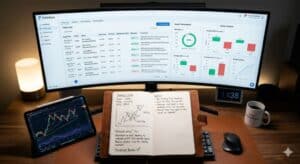
A lot of traders concentrate heavily on entries and exits and leave the record-keeping that demonstrates the reality of what is doing well. An accurate trading diary helps you identify bad habits, control risk, and trade on facts rather than recollection. The difficulty with untracked trades is that you can make poor position-sizing decisions, neglect stop losses, or overtrade after a loss.
Good trade tracking is also a discipline maker since each decision is tracked. Through time, these records will indicate whether your strategy will work in particular configurations, sessions, or in a given market environment, which will provide you with a more solid foundation in future trades.
Essential Data Points to Record in Your Trading Journal
The trading journal is effective when it records the information behind all the positions, other than the ultimate profit or loss. Recording entails the recording of the asset, date, entry and exit point, position, stop loss, target, and result. Note the arrangement, why it proceeded, and if it adhered to your plan or not.
You no longer have to track your trades in a notebook. Many digital tools can help you keep an investment journal, including Finbotica: https://finbotica.com/investment-journal/. Platforms like this give traders a ready-made place to store all trade details in one location, making records easier to organize and review. The clearer your notes are, the easier it becomes to revisit past trades and learn from them.
Choosing the Right Tools and Platforms for Trade Tracking
The most valuable tracking tool is that which you will employ on a regular basis. Spreadsheets are useful to traders who want complete control over columns, formulas, and custom notes. Trading platforms will save your time using templates, dashboards, and tidier reports. History is also built into some broker platforms, but those logs might not capture all of the features. Manual work and input errors can be minimized when active traders use automated trade logs. Begin with a basic system, and upgrade to a higher-grade platform when volume increases or a more detailed review is required.
Analyzing Your Trading Data for Performance Improvement
A journal becomes useful when you review it with the right questions in mind. Begin with simple measures like win rate, average gain, average loss, and total return by setup. Then consider the trade expectancy to determine whether your approach has a positive edge relative to a larger sample.
The review of patterns is also important. You will discover that you trade best at some time of the day, or in some market, or after some signal. You will also be likely to see duplication of mistakes, like early exits or excessive positions. Such results can make wiser choices than intuition alone.
Developing a Routine for Consistent Trade Review and Reflection
Trade review is more of a routine rather than an occasionally performed task. Make time each week to review your new positions and evaluate them on the trading plan. A short daily check can also help you catch mistakes while the details are still fresh. Whenever you are looking at it, ask yourself, did you adhere to your rules, did the emotions affect the execution, and which arrangements worked the best? Other traders also take their journal to a mentor, coach, or accountability partner to get an outside perspective. Objectives review makes the process more focused and easier to sustain in the long run.
Integrating Trade Tracking Insights into Your Trading Strategy
The value of tracking becomes apparent when you adjust your approach in line with your notes. In case the information indicates one of the setups continues to fail, limit its usage or eliminate it. If your losses are typically due to overtrading, tighten your risk controls and reduce exposure. Another way you can be flexible with the market changes is by assessing the conditions that favor your approach and those that hamper it. Minor adjustments, which are formed out of repetitive observations, usually prove superior to big strategy changes based on a single bad week. This is facilitated by consistent learning, and it helps to solidify your trading plan.
Final Thoughts
Trade tracking will make your decisions systematic and make every position a lesson. A quality journal, frequent revisiting, and accurate analysis will allow you to perfect your process with time. Start and document all your trades and apply what you learn to make better decisions on the next one.
