

Why Crypto Traders Are Moving Away From Their Real Phone Numbers
Every major crypto exchange, Binance, Coinbase, Kraken, OKX, and Bybit, requires a phone number to create an account and enable two-factor authentication. That number sits in their databases. It is linked to your account. And it becomes a target. In 2024, the FBI’s Internet Crime Complaint Center tracked nearly $26 million in US losses from SIM swap attacks alone. A virtual phone number for crypto account setup separates your real SIM from every exchange you use. This article explains why that matters and how AI trading tools are solving the same problem at scale.
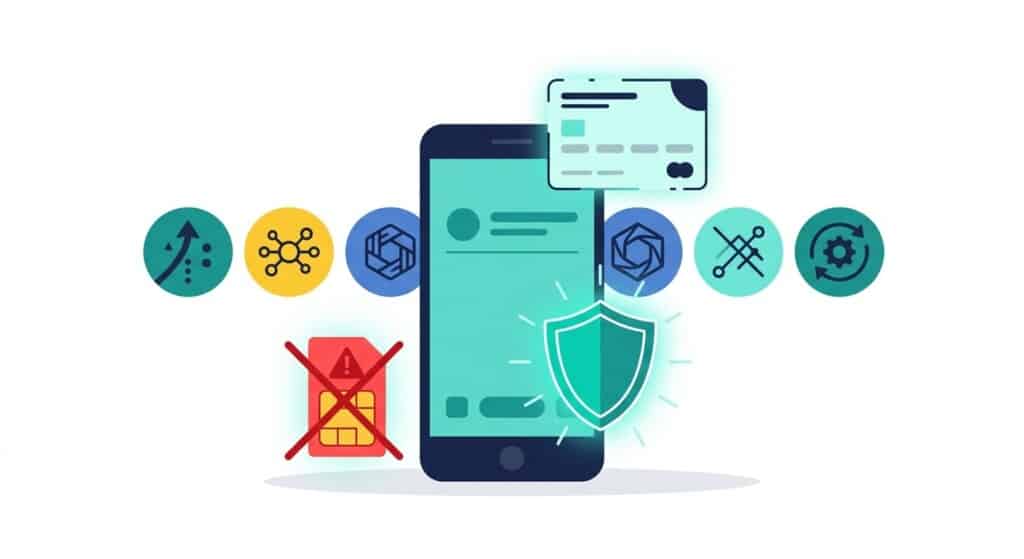
Virtual phone number protecting crypto exchange accounts from SIM swap attacks
Every Major Exchange Requires Your Phone Number
Phone verification is built into the onboarding flow of every significant centralised exchange. Binance requires it for account creation and uses SMS as a default 2FA method. Coinbase requires phone verification before enabling trading functionality. Kraken’s entry-level tier asks for a phone number before any trading access is granted. OKX and Bybit use SMS codes for withdrawal confirmations and security alerts.
For most users, this means their personal mobile number is registered across four, five, or more exchange accounts. Each of those registrations is a data point. Each exchange database is a potential breach target. And each SMS-based 2FA setup is a potential entry point for anyone willing to impersonate you with your carrier.
This is not a hypothetical risk. It is the most common attack pattern in crypto account theft right now.
The SIM Swap Problem Is Getting Worse
A SIM swap attack works like this: an attacker gathers your personal information, your name, address, date of birth, and the last four digits of your account, then calls your carrier and convinces a representative to transfer your number to a SIM card they control. From that point, every SMS sent to your number arrives on their device. Every exchange 2FA code. Every password reset link. Every withdrawal confirmation.
The scale of the problem is no longer deniable. According to SIM swap fraud statistics compiled by security researchers, UK cases surged 1,055% between 2023 and 2024 from 289 incidents to nearly 3,000 in a single year. In the US, a California arbitrator ordered T-Mobile to pay $33 million in a single SIM swap case where over $38 million in cryptocurrency was stolen from one victim. The FTX exchange was itself compromised through a SIM swap attack.
The attack does not require technical sophistication. It requires personal information and a willing or deceived carrier representative. As data breaches continue to expose billions of credentials, over 1.7 billion were found on dark web markets in 2024 alone, the raw material for these attacks is abundantly available.
AI-powered voice cloning tools are now being used to make social engineering calls more convincing. The same technology accelerating legitimate AI trading tools is lowering the barrier for attackers.
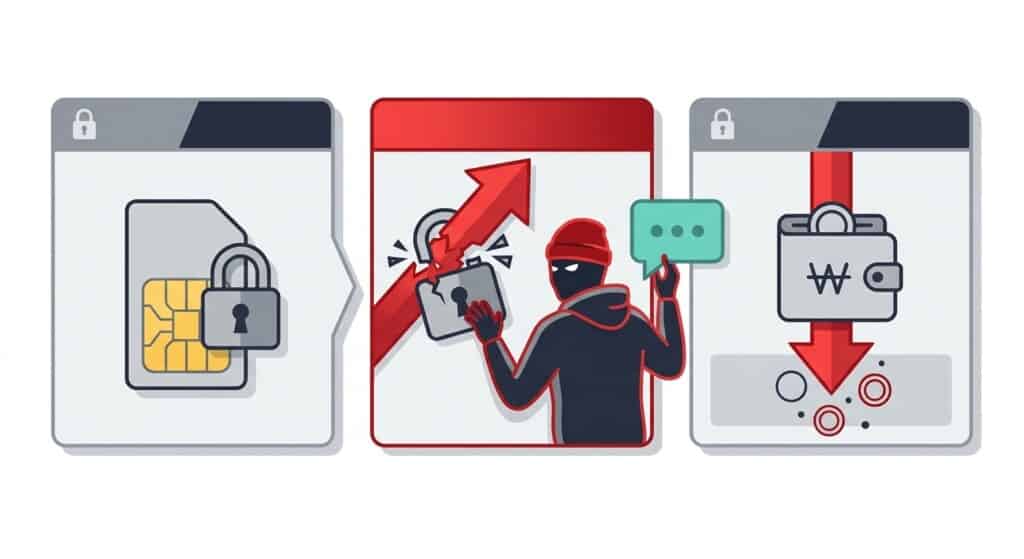
SIM swap attack stealing crypto exchange 2FA codes via phone number hijack
Why a Virtual Phone Number for Crypto Changes the Risk Profile
A virtual phone number registered to a crypto exchange account breaks the SIM swap attack chain at its source. If your exchange account is tied to a dedicated virtual number rather than your personal mobile, there is no carrier account to target. An attacker who wants to SIM swap your Binance account cannot find a number linked to your real identity to social-engineer against.
This is the core value of using a non-VoIP virtual number for crypto account setup. Non-VoIP means the number routes through real carrier infrastructure; it is not a VoIP range that exchanges blocks during verification. It passes Binance’s, Coinbase’s, and Kraken’s SMS checks the same way a physical SIM does. You receive the verification code in your Quackr dashboard, enter it, and the account is active. Your personal number never touches the exchange.
Traders managing accounts across multiple exchanges also benefit from the separation of identity. Rather than reusing one personal number across Binance, OKX, and Kraken, creating a traceable link between accounts, a dedicated virtual number per exchange keeps each account isolated. If one exchange account is compromised, the blast radius stops there.
A secondary benefit is database exposure. Every exchange that has been breached has exposed its user records, including phone numbers. Coinbase experienced a third-party breach in 2024 that exposed user data, including bank account numbers. Your personal mobile number appearing in a breached exchange database is a different category of risk from a virtual number that is not connected to your real identity.
What AI Trading Bots Need From Phone Verification
AI trading platforms like 3Commas, Cryptohopper, and Pionex connect to exchange accounts via API keys. Those API keys require a verified, active exchange account to generate. The bot cannot verify the account itself; a human has to complete the SMS verification step during account creation before the bot can connect.
For individual traders running one or two bots, this is a minor friction point handled manually. For developers running multi-exchange strategies across several accounts, or teams managing bot portfolios for clients, the phone verification step becomes a recurring operational bottleneck. Each new exchange account requires a verified number. Each number needs to reliably receive the SMS. And each number ideally maps to a distinct identity to avoid cross-account correlation.
The solution follows the same pattern as the security use case: dedicated virtual numbers, one per exchange account, that can be provisioned quickly and managed without physical hardware. The difference at scale is that manual provisioning through a dashboard stops being viable, which is where programmatic access matters.
The Programmatic Solution: MCP and API Provisioning
For developers and serious bot operators, Quackr’s MCP server for SMS removes the manual step entirely. The Model Context Protocol is an open standard that lets AI agents call external tools programmatically. With the Quackr MCP server connected to a bot’s workflow, the agent can request a virtual number in the required country, submit it to the exchange during account creation, retrieve the incoming verification SMS, complete the registration, and hold or release the number without any dashboard interaction.
This is the same pattern that Twilio and Vonage use for their communication MCP servers, applied specifically to virtual number provisioning for SMS verification. It scales cleanly from one account to hundreds. Each number is non-VoIP, exclusively assigned for the rental period, and released programmatically when no longer needed.
For teams building automated crypto portfolio management systems or running arbitrage strategies across multiple exchanges, this infrastructure removes one of the last manual checkpoints in an otherwise automated workflow.
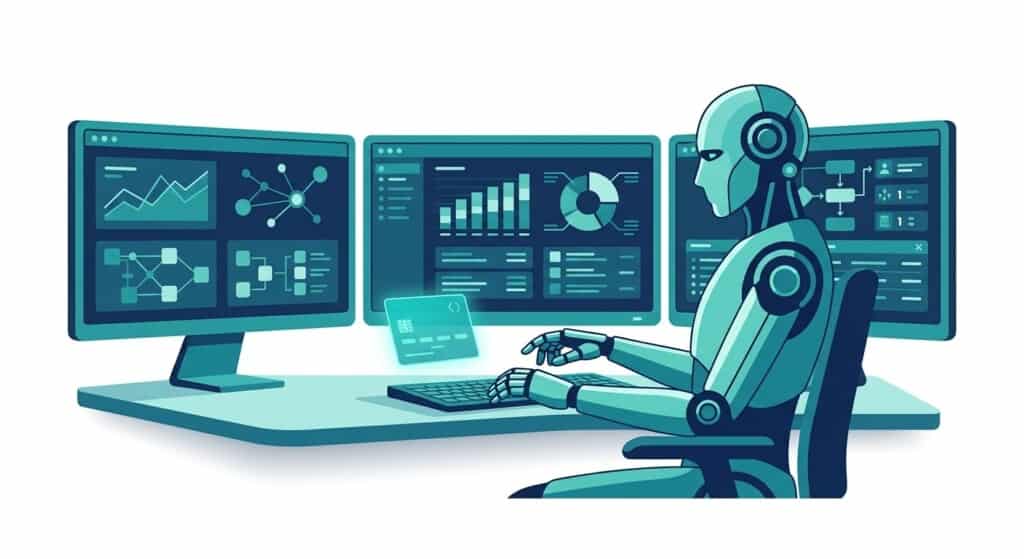
AI trading bot using virtual phone number for automated crypto exchange verification
Frequently Asked Questions
Does Binance require a real phone number to sign up?
Binance requires phone verification for account creation and uses SMS as its default 2FA method. A non-VoIP virtual number passes Binance’s carrier checks reliably. VoIP numbers are blocked. A rented non-VoIP number from a provider like Quackr receives the verification SMS in an online dashboard and works the same as a physical SIM from the exchange’s perspective.
Can a SIM swap attack steal my crypto?
Yes. Once an attacker controls your phone number, they intercept every SMS-based 2FA code sent to it. That includes exchange withdrawal confirmations and password reset codes. A T-Mobile arbitration case in 2025 resulted in a $33 million award after a single SIM swap enabled the theft of over $38 million in cryptocurrency from one victim.
Do AI trading bots need a verified phone number?
Indirectly, yes. AI trading bots connect to exchanges via API keys, which require a verified exchange account to generate. The phone verification step happens during account creation before the bot connects. Developers running multiple bot accounts across exchanges need dedicated numbers for each account, making a virtual number provider with API or MCP access a practical solution.
Will a virtual number work for crypto exchange verification?
A non-VoIP virtual number works reliably for crypto exchange verification. VoIP numbers are blocked by Binance, Coinbase, Kraken, and most other major exchanges because they detect the number range. Non-VoIP numbers route through real carrier infrastructure and are indistinguishable from a physical SIM, which is why they pass the verification checks that VoIP numbers fail.
How do I get a phone number for crypto without using my real SIM?
Rent a non-VoIP virtual number from Quackr, choose a country that matches the exchange’s regional requirements, and receive SMS online directly in the dashboard. The number is active immediately, exclusively assigned to you for the rental period, and keeps your personal SIM out of every exchange database you sign up for.
