

How to Plan a Furnace Replacement in Salt Lake City, Utah
Key Takeaways
- Furnace replacement planning should start with a home assessment, not a brand or a price tag.
- Oversized and undersized furnaces can both create comfort and efficiency problems and lead to wear issues.
- AFUE ratings matter, but venting, drainage, ductwork, and installation quality matter too.
- A complete written quote should clearly identify equipment, labor, permits, system changes, and warranty coverage.
- Comparing proposals before the coldest part of winter can lead to a more confident decision.
Replacing a furnace is a major home decision, especially in Salt Lake City, Utah, where cold winter nights and temperature swings make dependable heat more than a convenience. Planning before an unexpected breakdown gives homeowners time to compare equipment, review installation details, and make choices based on comfort rather than urgency. If you are considering gas furnace installation in Salt Lake City Utah, begin by looking at the whole heating system, not just the furnace cabinet.
The right replacement should fit your home’s heat loss, ductwork, fuel source, ventilation layout, and household priorities. A furnace with an impressive label cannot compensate for poor airflow, leaky ducts, or incorrect sizing. The goal is steady, safe, efficient heat throughout the home.
When Does a Furnace Need Replacement?
Age alone does not automatically mean a furnace must be replaced, but an older unit with frequent service calls deserves closer attention. Other warning signs include rooms that heat unevenly, unusually high heating bills, loud or repeated cycling, and recurring repairs. A cracked heat exchanger, combustion concern, or carbon monoxide alarm requires prompt professional evaluation. On the other hand, a newer system with one isolated and reasonably priced repair may still be worth fixing.
Start With a Home Heating Assessment
Salt Lake City homes vary widely, from older homes with original building features to newer, tightly sealed construction. An installer should consider square footage, layout, ceiling height, insulation, windows, air leakage, basement conditions, and how individual rooms are used. Duct condition is equally important. Restricted returns, disconnected runs, and leaking ducts can prevent heated air from reaching the spaces that need it.
Why Furnace Size Matters
A larger furnace is not automatically a better furnace. An oversized unit may cycle on and off frequently, which can reduce comfort and add unnecessary wear. An undersized unit may run for long periods and still struggle to maintain the thermostat setting during severe weather. Proper sizing begins with a heating load calculation that accounts for the home itself. The Department of Energy explains that heating and cooling loads should be determined before selecting equipment, rather than relying on rules of thumb.
For example, a small Salt Lake City home that has received attic insulation, air sealing, and window upgrades may need less heating capacity than it did when its current furnace was installed. Ask the contractor how the proposed size was calculated, whether the duct system can support the required airflow, and why a direct replacement of the old unit was or was not appropriate.
Comparing Furnace Efficiency Ratings
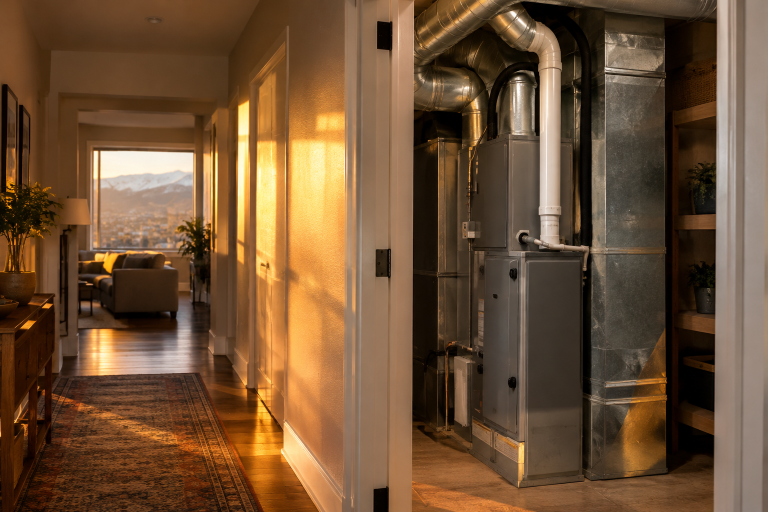
AFUE, or Annual Fuel Utilization Efficiency, describes how efficiently a furnace converts fuel into heat over a typical heating season. A higher AFUE rating can reduce fuel waste, but the best choice depends on installed cost, natural gas use, expected time in the home, and the system’s physical requirements. Wikipedia explains that AFUE is expressed as the ratio of useful energy output to fuel input.
Standard-efficiency equipment generally has simpler venting requirements, while high-efficiency condensing furnaces can require different exhaust piping, a condensate drain, and electrical or control updates. A high-efficiency option may be a strong fit for one home but add avoidable complexity in another. Review the full installation plan before comparing projected savings.
Furnace Features Worth Comparing
Single-stage furnaces operate at one heating output. Two-stage and modulating systems can adjust output more gradually, which may improve comfort when matched to the home and ductwork. Variable-speed blower motors can also help manage airflow more smoothly. Compare thermostat compatibility, operating noise, filter sizes, replacement filter costs, parts availability, and manufacturer warranty terms. Advanced features are valuable only when the installation supports them.
What a Furnace Replacement Quote Should Include
A reliable proposal should identify the furnace make, model, capacity, and AFUE rating. It should also explain labor, removal and disposal of the old unit, permits, inspections, thermostat work, venting changes, gas piping, electrical work, condensate drainage, filter racks, and any duct modifications. Confirm both manufacturer parts coverage and the installer’s labor warranty. Ask for excluded items in writing, particularly when equipment is difficult to access or the existing installation is older.
Typical Furnace Replacement Costs in 2026
There is no single furnace replacement price for every home in Salt Lake City. Final cost can vary based on furnace capacity, efficiency, fuel type, equipment access, venting requirements, electrical upgrades, drainage needs, duct repairs, permit fees, and thermostat changes. Compare complete scopes of work rather than choosing the lowest opening number. A lower proposal may omit work that another contractor has already included.
Furnace Replacement or Repair?
This comparison can help frame the decision, although a qualified technician should evaluate safety-related concerns.
| Repair May Make Sense When | Replacement May Make Sense When |
|---|---|
| The furnace is relatively new, and the repair is isolated. | The system is older and has needed repeated costly repairs. |
| Comfort and operating costs remain acceptable. | Heating bills, uneven temperatures, or cycling problems keep increasing. |
| The equipment can be repaired and operated safely. | A major safety issue or failed heat exchanger has been identified. |
Questions to Ask Before Choosing an Installer
- How was the proposed furnace size determined?
- Will the existing ducts, returns, and thermostat work properly with the new system?
- Are changes to venting, drainage, gas piping, or electrical service required?
- Who obtains permits and coordinates inspections?
- Will the system be tested for safe combustion, airflow, and thermostat operation?
- What happens if hidden issues are found after the old furnace is removed?
Prepare for Installation Day and Avoid Common Mistakes
Clear a path to the furnace area, move stored belongings away from the workspace, and keep children and pets clear of the project. Confirm how long heat may be unavailable, whether the thermostat will be replaced or reprogrammed, and where equipment paperwork will be kept. Avoid choosing by brand name alone, assuming the old furnace size is correct, overlooking duct problems, or waiting for the coldest week of winter to request estimates.
A Simple Furnace Replacement Planning Checklist
- Review the furnace’s age, repair history, and current performance.
- Request a home assessment and a clear sizing explanation.
- Compare efficiency, comfort features, warranties, and installation scope.
- Get at least two written proposals with similar details.
- Confirm permits, inspections, venting, ducts, and disposal before work begins.
Conclusion
Thoughtful furnace replacement planning helps Salt Lake City homeowners choose equipment that supports comfort, safety, and practical long-term costs. A well-sized furnace, properly matched to the home and installed with attention to airflow and venting, is far more important than simply selecting the biggest unit or the lowest quote.
