

Lifestyle Car Buying: Find Your Ideal Vehicle Today
Key Takeaways
- Assess your daily driving habits and space requirements.
- Consider fuel efficiency and environmental impact.
- Evaluate safety features and technological amenities.
- Set a realistic budget that includes ownership costs.
- Test drive multiple vehicles to find the best fit.
Finding the perfect vehicle to match your daily routine and long-term preferences can seem daunting, but a careful approach makes all the difference. By considering your unique needs, transportation habits, and financial plan, you can ensure that your next car integrates seamlessly into your life. Learn more about choosing the best vehicle for your lifestyle and making a wise investment for the road ahead.
It’s essential to dive beyond superficial features and focus on what really matters: comfort, fuel efficiency, safety, and cost. Assessing your typical journeys, whether commuting, family errands, or outdoor adventures, helps ensure you don’t end up with a car that is too limiting or unnecessarily expensive. With an ever-growing number of models and features on the market, having a clear plan can make the decision process straightforward and rewarding.
Assess Your Driving Habits and Needs
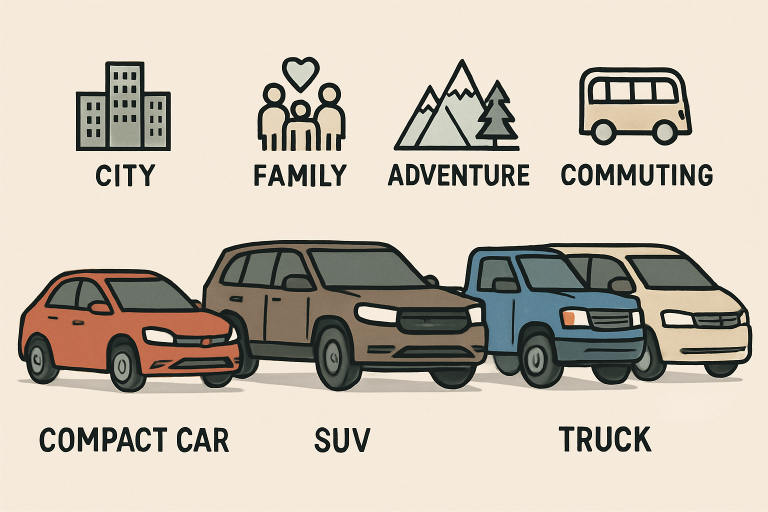
Examining your driving style is the first step in finding the right vehicle for you. Short city drives typically call for a compact car, which is easier to maneuver and park and often provides better fuel efficiency for stop-and-go traffic. Suburban or rural living usually means longer distances and rougher roads, so a crossover, SUV, or pickup truck could offer the comfort and reliability you need.
For those with unique needs, such as regular towing or off-roading, specialized vehicles like trucks or all-wheel-drive SUVs are essential. Think about the weather as well. If you frequently drive in snowy climates, four-wheel drive and higher ground clearance are advantages you cannot ignore. Families and professionals who need to travel with colleagues or kids should consider passenger capacity, seat flexibility, and features that make longer rides more enjoyable.
Consider Passenger and Cargo Space
When evaluating vehicles, it’s worth considering how often you need to transport other people or large items. Parents may prefer minivans or spacious SUVs that can easily accommodate car seats, strollers, backpacks, and groceries. If you have hobbies that require hauling gear, such as biking, skiing, or camping, look for models with adjustable cargo space and roof rails.
Unexpected situations, like a spontaneous road trip or helping a friend move, often call for a versatile vehicle interior. Features like split-folding seats, hidden storage compartments, and hands-free liftgates are valuable details that make daily life more convenient. For those living an urban lifestyle or commuting with just one passenger, efficiency and compactness may trump sheer space.
Evaluate Fuel Efficiency and Environmental Impact
As climate change awareness increases and fuel prices fluctuate, choosing a fuel-efficient or eco-friendly car can have a substantial impact on both your wallet and the environment. Hybrids and electric vehicles (EVs) continue to gain traction, offering impressive mileage and significant reductions in carbon emissions compared to traditional gasoline-only cars. According to the U.S. Environmental Protection Agency, EVs produce zero tailpipe emissions, making them ideal for environmentally conscious drivers.
If you travel primarily within city limits, plug-in hybrids and fully electric models are more practical given the availability of charging stations and short, predictable commutes. Those who spend more time on highways can benefit from modern internal combustion engines, many of which now boast improved fuel economy and lower emissions, thanks in part to advances in fuel-saving technologies.
Prioritize Safety Features
Safety technology has advanced rapidly, and today’s vehicles are packed with features that can help prevent collisions and minimize injuries. When comparing models, look for advanced driver assistance systems, such as lane-keeping assistance, adaptive cruise control, forward collision warning, and blind-spot monitoring. These extras are not just bells and whistles; they can reduce the likelihood of accidents and lower insurance premiums.
It’s wise to check safety ratings from reputable organizations such as the Insurance Institute for Highway Safety (IIHS). A high rating means a car provides robust protection in a wide range of accident scenarios. Parents with young children should also pay attention to ease-of-use ratings for child seat anchors and the availability of rear-seat reminders.
Set a Realistic Budget
Affordability is far broader than just the sticker price of a new car. Factor in monthly payments, loan interest, insurance premiums, maintenance, and fuel or charging costs. Financial advisors often recommend that your auto expenses should not exceed 10 percent of your monthly income. A solid down payment and a shorter-term loan will help reduce your interest burden and avoid long periods of negative equity.
Predictable costs, such as regular maintenance (oil changes, tire rotations, inspections), should be included in your planning. Some vehicles, particularly luxury models, can be more expensive to repair and insure. Considering the total cost of ownership will help you avoid unpleasant surprises and ensure that your car fits comfortably into your long-term budget.
Test Drive and Compare Options
Narrowing your options to two or three models helps you make a more informed choice during the test-drive phase. Testing cars in various real-world conditions, not just on dealership lots, can reveal handling strengths, seat comfort, and visibility. Listen for road noise, check how easy the technology interface is to use, and ensure you feel confident behind the wheel.
Do not hesitate to ask questions about warranty coverage, servicing, and the expected resale value. Taking a comprehensive approach makes it easier to spot potential deal-breakers before you commit. Gathering opinions from trusted automotive publications like Consumer Reports can also provide valuable insights and comparisons beyond what you’ll discover at the dealership.
Conclusion
Choosing a vehicle tailored to your lifestyle means careful planning and research. Understanding your daily habits, seeking out reliable information, and weighing your priorities will help you make a purchase that provides enjoyment, reliability, and value for years to come. Take the time to explore your options, and you’ll drive away with confidence in your decision.
