

Peptide Research: Trends, Safety, and Scientific Developments
Key Takeaways:
- Peptide research is progressing quickly, with expanding therapeutic applications and design methodologies shaping the future of medicine.
- The rising use of unapproved peptides, often promoted in unregulated spaces, poses notable risks and demands proper oversight.
- Artificial intelligence is transforming how peptides are designed, enabling faster, more effective drug discovery.
Table of Contents:
- Introduction
- Therapeutic Applications of Peptides
- Safety Concerns and Regulatory Challenges
- Artificial Intelligence in Peptide Design
- Advancements in Peptide Synthesis and Delivery
- Market Trends and Future Outlook
- Final Thoughts
Introduction
Peptides are rapidly gaining attention for their critical roles in a range of biological and medical applications. These short chains of amino acids act as signaling molecules, offering targeted therapeutic opportunities for complex diseases. With the urgency for new treatments in conditions ranging from cancer to metabolic disorders, researchers are investing in innovative solutions involving research peptides.
The popularity of peptides is not only scientific but also cultural. Influencers are increasingly talking about their potential. While this visibility is accelerating public curiosity and market demand, it also brings challenges, particularly around the safe and regulated use of novel peptides. As research advances, ensuring safety and reliability is more important than ever for scientists and consumers.
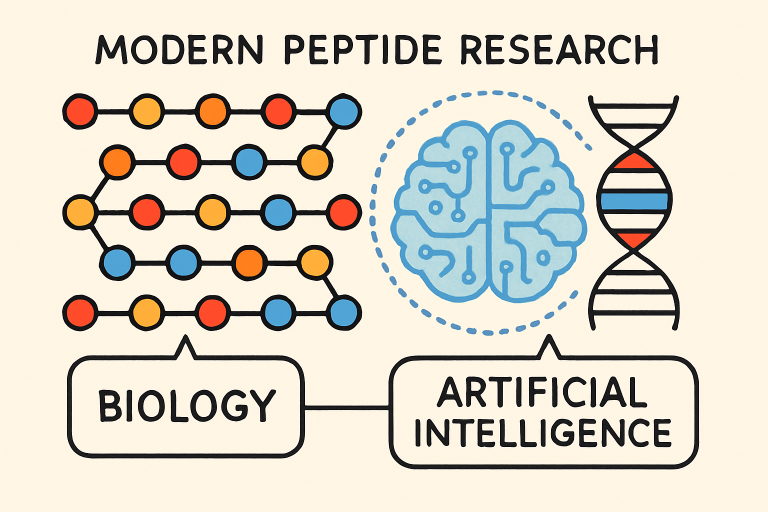
Modern peptide research stands at the intersection of innovation and responsibility. The integration of artificial intelligence into peptide development accelerates our ability to create new therapeutics, but this also requires a clear commitment to scientific rigor, patient safety, and ethical commercialization.
Behind this drive are advanced platforms, academic collaborations, and biotechnology companies that are redefining what peptides can do for medicine. At the same time, the industry faces challenges such as manufacturing complexities and limited oral bioavailability, prompting experts to develop new delivery methods for next-generation peptide drugs.
For research applications, sourcing the highest quality peptides is essential for consistent results. Scientists and laboratories looking to buy copper peptides or other specialized products need solutions they can trust, highlighting the importance of responsible supply chain management.
Therapeutic Applications of Peptides
Peptide-based drugs have been a game-changer in modern therapeutics. They enable precise targeting of disease mechanisms with fewer side effects than larger protein biologics or traditional small molecules. A prominent example is GLP-1 receptor agonists, which have significantly improved the management of type 2 diabetes and obesity. These medications work by mimicking natural hormones, helping to better control blood sugar and appetite than many previous treatments.
Peptide research is also paving the way for new approaches in cancer therapy. Tumor-targeting peptides are being developed to deliver cytotoxic agents specifically to malignant cells, minimizing collateral damage to healthy tissues. This strategy improves the efficacy of cancer treatments and reduces common side effects often associated with chemotherapy. These emerging applications demonstrate the versatility and promise of peptides in tackling some of medicine’s most persistent challenges.
Safety Concerns and Regulatory Challenges
The growing popularity of peptide-based interventions outside traditional research and clinical settings is accompanied by real regulatory and safety concerns. An increasing number of unapproved peptides are circulating online and in wellness clinics, frequently marketed through influencer recommendations and celebrity endorsements. These products often bypass essential regulatory checks and clinical testing. The U.S. Food and Drug Administration (FDA) has issued multiple warnings related to unregulated peptides, underscoring the lack of research supporting their safety and efficacy.
Compounding pharmacies, which traditionally serve patient-specific needs, have found themselves at the center of legal and regulatory action over the distribution of controversial peptides. Disputes between federal regulators and pharmacy industry stakeholders continue to shape access and control over these substances. Ensuring patient safety and scientific integrity requires that all stakeholders adhere to established regulatory frameworks and evidence-based practices.
Artificial Intelligence in Peptide Design
Recent advances in artificial intelligence (AI) are fundamentally changing how researchers approach peptide design. AI-driven tools can now predict the structure, binding affinity, and stability of new peptide molecules at speeds previously unthinkable. Tools such as RFpeptides can model and generate cyclic peptides, which are of particular interest in drug development due to their enhanced stability and bioactivity.
With AI, scientists can address the multi-objective challenges of peptide optimization, such as balancing solubility, target binding, and membrane permeability. This computational power reduces the time and cost of traditional laboratory screening methods, enabling the exploration of a broader array of peptide candidates for therapeutic applications.
Advancements in Peptide Synthesis and Delivery
Technological progress in peptide synthesis and delivery methods is unlocking new frontiers in drug development. Scientists are leveraging solid-phase synthesis techniques and automated peptide synthesizers, making the production process more efficient and accessible. These advances help ensure that peptides retain their structural integrity and functionality from the lab bench to clinical use.
Innovations are also evident in delivery systems designed to address longstanding issues such as poor oral bioavailability and rapid enzymatic degradation. Researchers are developing nanoparticle-based carriers, injectable formulations, and even peptide conjugates that can cross biological barriers more effectively. Such breakthroughs improve the stability, absorption, and overall therapeutic profile of peptide drugs, increasing their potential for success in clinical settings. A recent report on advances in drug delivery technologies and their impact on peptide therapies further highlights these critical developments.
Market Trends and Future Outlook
The market for peptide therapeutics is poised for significant growth, projected to reach $81.5 billion by 2034. This expansion reflects not only increased interest from pharmaceutical companies but also the rising demand for targeted, personalized medicine among patients and providers. Despite the promising outlook, manufacturing complexity, limited shelf-life, and challenges in achieving oral formulations continue to slow progress.
To overcome these hurdles, the industry is investing heavily in process innovation, quality control, and specialized delivery platforms. The distance between lab innovation and real-world patient impact is narrowing as collaborations between academia, biotech, and regulatory agencies intensify. With continued advances, peptide drugs will likely cement their role as essential tools in the future of healthcare.
Final Thoughts
Peptide research stands at the cutting edge of medical progress, fostering breakthroughs in disease treatment and prevention. While rapid innovation creates exciting opportunities for both established companies and new entrants, responsible use and diligent regulation remain vital to ensuring public safety. As artificial intelligence and improved manufacturing practices transform the landscape, sustained research and adherence to regulatory guidelines are paramount for realizing the full potential of peptides in modern medicine.
