

Safe and Compliant Hazardous Materials Disposal
Understanding Pharmaceutical Waste in Industrial Waste Management
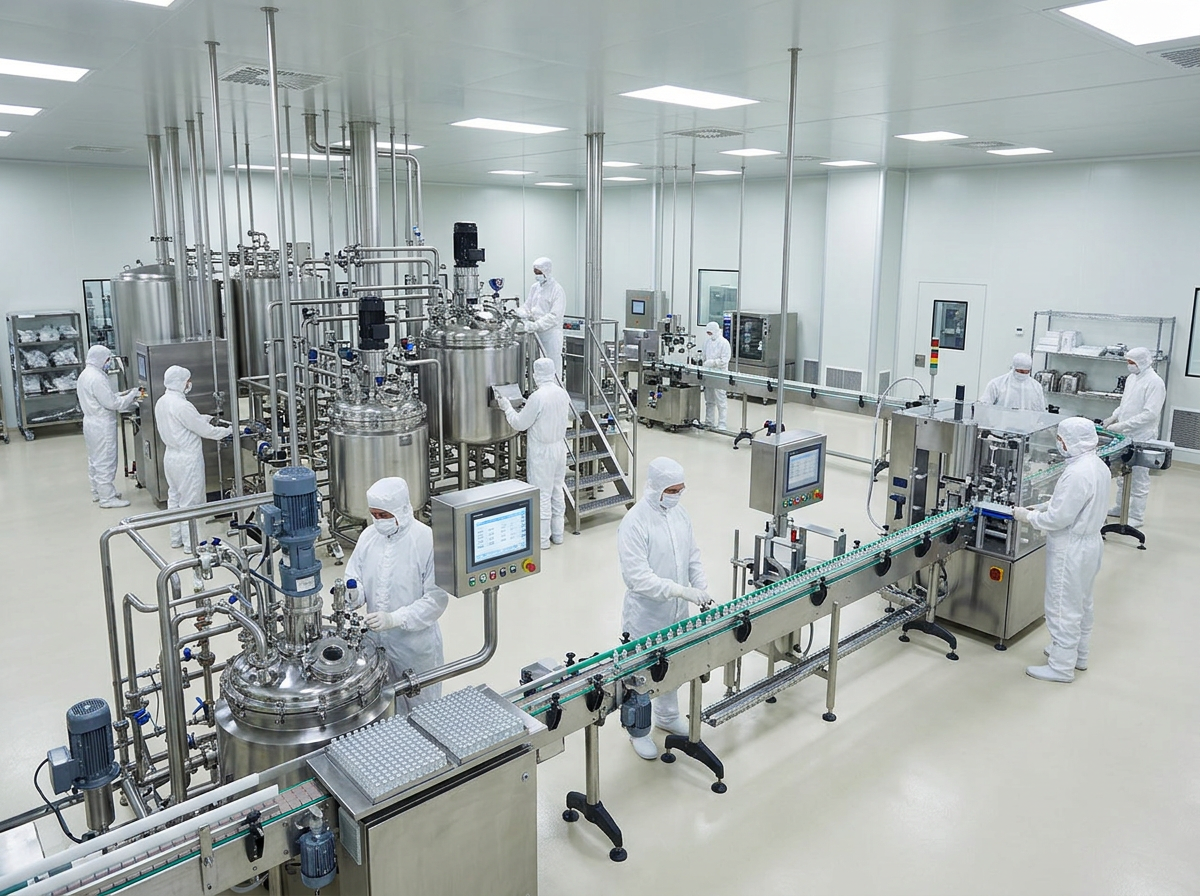
The scope of pharmaceutical waste extends far beyond expired medications in a clinic’s storage room. In industrial settings, particularly pharmaceutical manufacturing plants, the generation of such waste is a continuous and complex process. This includes a diverse array of materials such as chemical residues from production processes, manufacturing sludges, contaminated wastewater, and even personal protective equipment (PPE) that has come into contact with hazardous substances. Processes like solvent extraction, crucial in pharmaceutical synthesis, can also produce significant volumes of hazardous waste that require specialized handling and disposal. Industrial pharmaceutical waste disposal and effective industrial waste management in this sector is paramount for both environmental protection and regulatory compliance.
Defining Industrial Waste Management in Healthcare
Industrial waste management, when applied to the healthcare and pharmaceutical sectors, encompasses the systematic handling, treatment, and disposal of waste generated from various operations. This includes not only manufacturing but also research laboratories, hospitals, and even veterinary offices. The U.S. Environmental Protection Agency (EPA) categorizes generators of hazardous waste based on the quantity produced per month, influencing their regulatory obligations. These categories are:
- Very Small Quantity Generators (VSQGs): Generate less than 100 kilograms (kg) of non-acute hazardous waste and less than 1 kg of acute hazardous waste per month.
- Small Quantity Generators (SQGs): Generate between 100 kg and 1,000 kg of non-acute hazardous waste and less than 1 kg of acute hazardous waste per month.
- Large Quantity Generators (LQGs): Generate 1,000 kg or more of non-acute hazardous waste or 1 kg or more of acute hazardous waste per month.
These classifications determine the stringency of regulations, from storage limits to manifesting requirements. Regardless of the category, all generators are subject to the “cradle-to-grave” responsibility under the Resource Conservation and Recovery Act (RCRA), meaning they are accountable for their hazardous waste from its generation until its final disposal. This responsibility necessitates meticulous tracking and documentation across the entire waste stream.
Types of Pharmaceutical Waste Streams
Pharmaceutical waste is not monolithic; it comprises several distinct categories, each with specific handling and disposal requirements. Understanding these distinctions is crucial for proper segregation and management:
- Solid Waste: This category includes discarded pharmaceutical products, contaminated packaging, and items like spent chemical containers or rags used in manufacturing or healthcare settings. It also encompasses items such as used syringes and empty bottles.
- Liquid Waste: This stream often originates from manufacturing processes, including chemical sludges, wastewaters, and even expired liquid medications. Liquid pharmaceutical waste can pose significant environmental risks if not properly treated before discharge.
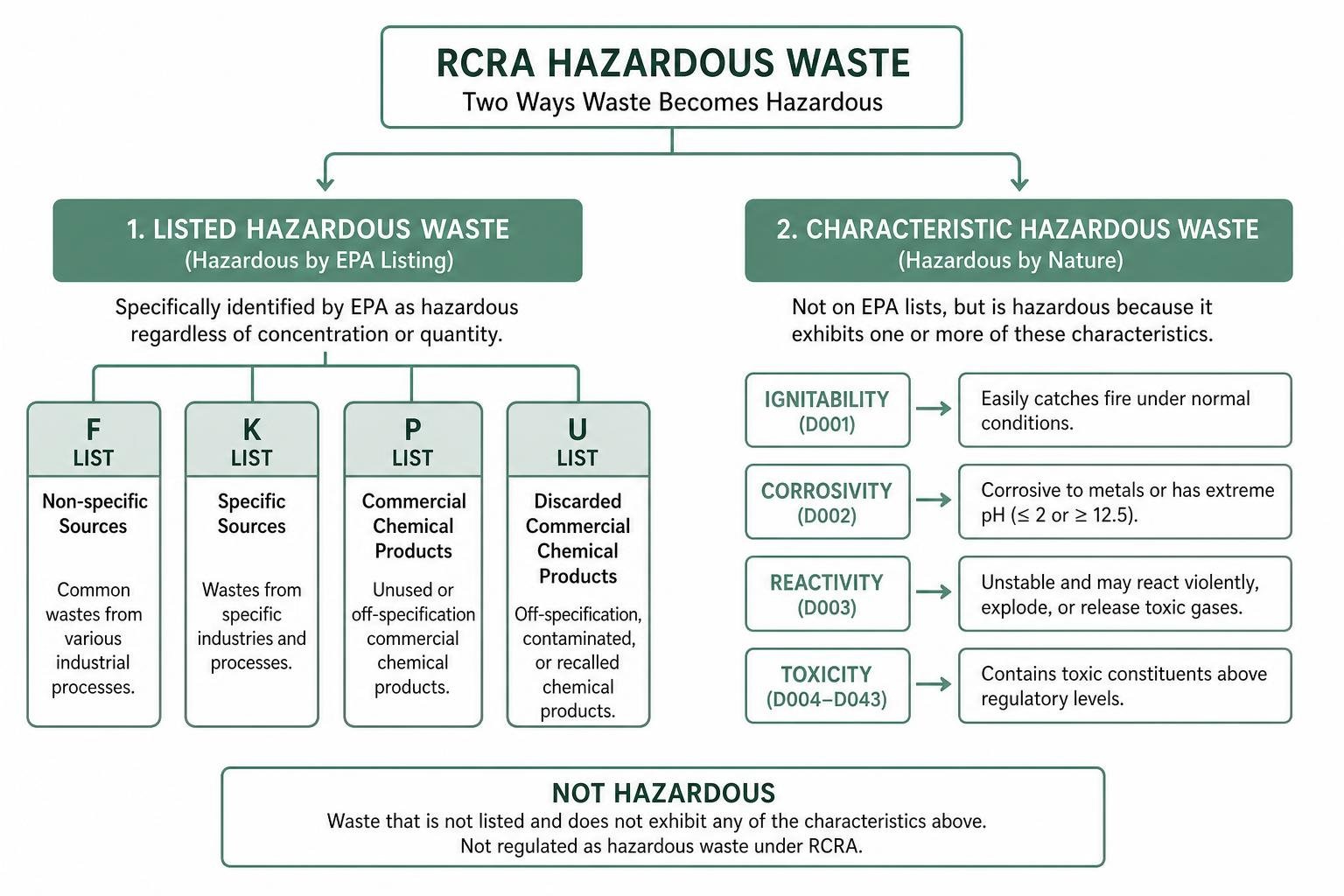
- Listed Hazardous Waste: These are pharmaceuticals specifically identified by the EPA as hazardous due to their inherent properties. They fall under four main lists: F, K, P, and U, which will be discussed in more detail below. These wastes are considered hazardous regardless of their concentration or quantity.
- Characteristic Hazardous Waste: If a pharmaceutical waste is not on one of the EPA’s lists, it can still be classified as hazardous if it exhibits one or more of the four characteristics: ignitability, corrosivity, reactivity, or toxicity.
- Non-Hazardous Pharmaceutical Waste: This category includes medications that do not meet the criteria for listed or characteristic hazardous waste. While not regulated under RCRA, these wastes can still pose environmental or public health risks and should be managed carefully, often through incineration. Examples might include certain dietary supplements or homeopathic remedies, though state regulations can vary, with some states treating all pharmaceutical waste as hazardous unless proven otherwise. Even non-RCRA regulated pharmaceutical waste should be handled with care due to potential harms if released into the environment.
Regulatory Frameworks and Hazardous Waste Classifications
The management of pharmaceutical waste is governed by a complex web of federal and state regulations, designed to protect human health and the environment. The primary federal agency is the U.S. Environmental Protection Agency (EPA), which enforces the Resource Conservation and Recovery Act (RCRA). However, other agencies also play crucial roles:
- Drug Enforcement Administration (DEA): Regulates controlled substances, which often overlap with hazardous waste pharmaceuticals.
- Department of Transportation (DOT): Governs the safe transportation of hazardous materials, including pharmaceutical waste, requiring specific packaging, labeling, and manifesting.
- Occupational Safety and Health Administration (OSHA): Sets standards for workplace safety, including handling hazardous materials and protecting workers who manage pharmaceutical waste.
- Clean Water Act: Addresses the discharge of pollutants into U.S. waters, impacting how pharmaceutical wastewater is managed.
This multi-agency oversight ensures a comprehensive approach to managing these potentially dangerous materials.
RCRA Hazardous Waste Lists in Industrial Waste Management
RCRA identifies specific hazardous wastes through several lists, which are critical for industrial waste management in the pharmaceutical sector:
- F List (Non-Specific Sources): This list includes hazardous wastes from common manufacturing and industrial processes, such as spent solvents used in pharmaceutical production. Examples might include spent halogenated solvents (e.g., carbon tetrachloride, perchloroethylene) or non-halogenated solvents (e.g., acetone, toluene).
- K List (Specific Sources): This list identifies hazardous wastes from specific industries and manufacturing processes. While less common for finished pharmaceuticals, it can apply to waste streams from certain chemical manufacturing operations that produce pharmaceutical ingredients.
- P List (Acute Hazardous Waste): These are acutely hazardous commercial chemical products, off-specification species, container residues, and spill residues. Wastes on the P list are considered highly dangerous, even in small quantities, and are designated as “acute hazardous waste.” Examples of P-listed pharmaceuticals include:
- P042 Epinephrine: Used in emergency medicine for severe allergic reactions.
- P046 Phentermine: A stimulant used as an appetite suppressant.
- Other examples include warfarin (P001) and nicotine (P075).
- U List (Toxic Hazardous Waste): This list includes discarded commercial chemical products, off-specification species, container residues, and spill residues that are considered toxic. While not acutely hazardous, they can still pose significant risks. Examples of U-listed pharmaceuticals include:
- U034 Chloral Hydrate: A sedative-hypnotic.
- U058 Cyclophosphamide Monohydrate: A chemotherapy drug.
- Other examples include chloroform (U044) and formaldehyde (U122).
A waste is considered “acute hazardous” if it is on the P list or meets the characteristic of acute toxicity. Even small amounts of P-listed wastes (e.g., 1 kg per month) can classify a facility as a Large Quantity Generator (LQG) for that waste stream, triggering more stringent regulations.
Characteristic Hazardous Waste Criteria
Even if a pharmaceutical waste is not explicitly listed under RCRA, it can still be classified as hazardous if it exhibits any of the following four characteristics:
- Ignitability: Wastes that can readily catch fire and sustain combustion. This includes liquids with a flash point less than 60°C (140°F), non-liquids that can cause fire under normal conditions, ignitable compressed gases, and oxidizers. Common pharmaceutical examples include alcohol-based cough syrups, aerosol cans (if they contain flammable propellants), and certain solvents.
- Corrosivity: Wastes that are highly acidic or alkaline and can corrode metal containers or cause tissue damage. Liquids with a pH less than or equal to 2 or greater than or equal to 12.5 are considered corrosive. Pharmaceuticals preserved in nitric acid or other strong acids/bases would fall into this category.
- Reactivity: Wastes that are unstable under normal conditions, react violently with water, can explode, or release toxic gases. While less common for finished pharmaceuticals, certain chemical precursors or byproducts in manufacturing could exhibit reactivity. For instance, medicinal nitroglycerine is generally not considered reactive (P081) if it does not exhibit the characteristic of reactivity.
- Toxicity: Wastes that are harmful or fatal when ingested or absorbed, or that leach toxic constituents into groundwater. Toxicity is often determined by the Toxicity Characteristic Leaching Procedure (TCLP) test, which simulates landfill conditions. If a waste leaches specific concentrations of certain chemicals (e.g., heavy metals like selenium, silver, or mercury, or organic compounds) above regulatory thresholds, it is deemed toxic. This can apply to pharmaceuticals containing heavy metals or other toxic components.
Generators are responsible for determining if their waste exhibits any of these characteristics through testing or applying process knowledge.
Operational Compliance Under EPA Subpart P
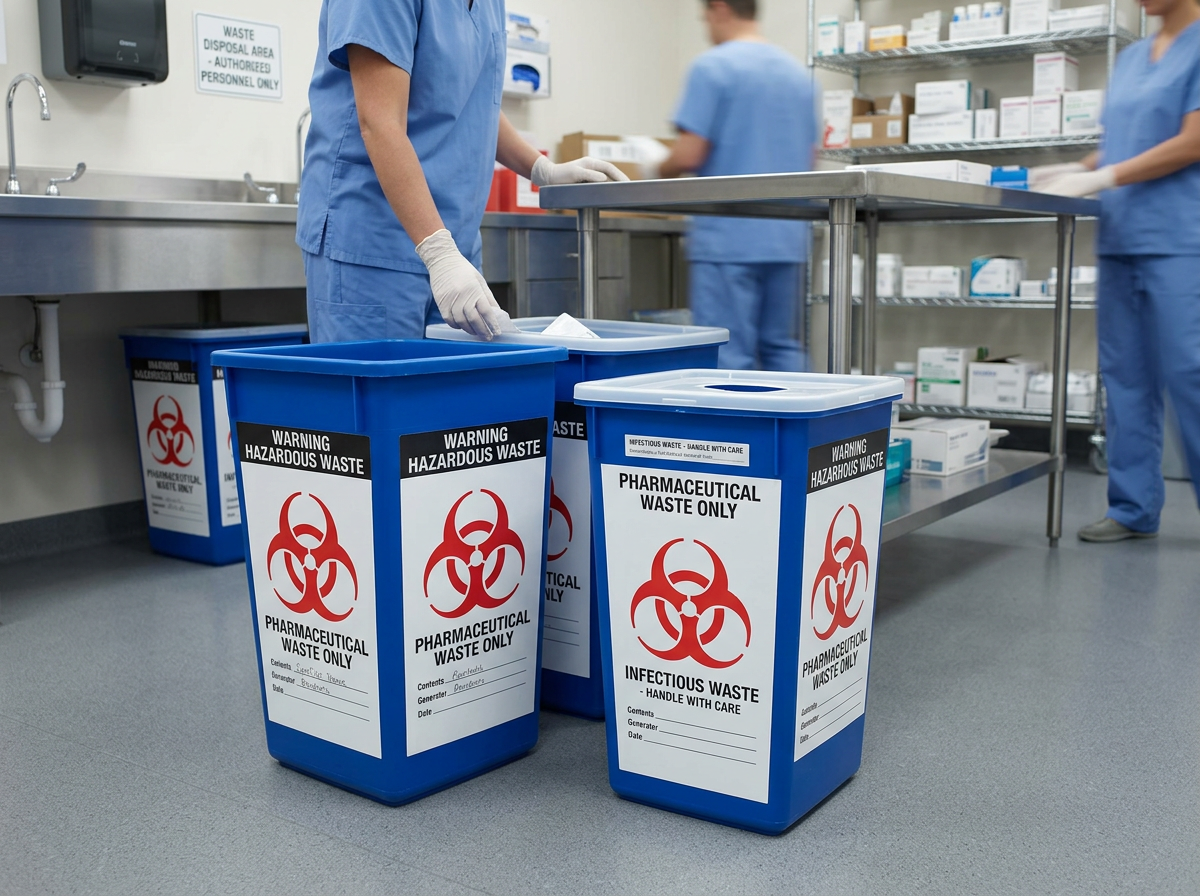
In 2019, the EPA finalized a significant rule, 40 CFR Part 266 Subpart P, specifically designed to streamline hazardous waste pharmaceutical management for healthcare facilities and reverse distributors. This rule, which became effective in most states by August 2019 (and in others as they adopted it), aims to simplify compliance, reduce sewering of hazardous waste pharmaceuticals, and provide a tailored regulatory framework.
One of the most impactful provisions of Subpart P is the sewering ban for hazardous waste pharmaceuticals. This means healthcare facilities are explicitly prohibited from flushing any hazardous waste pharmaceutical down the drain or toilet. While the ban strictly applies to hazardous waste pharmaceuticals, the EPA strongly discourages sewering any pharmaceutical, hazardous or non-hazardous, due to potential environmental impacts.
Subpart P also introduced several key changes:
- Hazardous waste pharmaceuticals managed under Subpart P do not count towards a healthcare facility’s monthly generator status (VSQG, SQG, LQG) for RCRA hazardous waste. This simplifies compliance for many facilities.
- It established specific requirements for healthcare facilities and reverse distributors, including notification requirements, manifesting procedures, and management standards for potentially creditable versus non-creditable waste.
Notification and Registration Protocols
Healthcare facilities that generate hazardous waste pharmaceuticals must notify the EPA or their authorized state agency (like the Texas Commission on Environmental Quality, TCEQ) of their activities.
- EPA Form 8700-12: Facilities operating under Subpart P, especially VSQGs that previously might not have needed an EPA ID, must submit EPA Form 8700-12 (Hazardous Waste Report) and check ‘Y’ for operating under 40 CFR Part 266 Subpart P. This ensures they are properly identified as managing hazardous waste pharmaceuticals under the new rule.
- State-Specific Forms: In states like Texas, facilities might need to use specific forms, such as TCEQ-00002. For instance, facilities generating 100 kg or more of non-acute non-pharmaceutical hazardous waste or 1 kg or more of acute non-pharmaceutical hazardous waste per month need to submit Parts D and G of this form.
- Solid Waste Registration: Facilities must maintain their solid waste registration, and if they were a VSQG that previously had a registration but now only generate pharmaceutical waste under Subpart P (which doesn’t count towards generator status), they might consider inactivating unnecessary solid waste registrations.
- EPA ID: Obtaining an EPA ID is a critical step for compliance, especially for facilities that were previously VSQGs but now manage hazardous waste pharmaceuticals under Subpart P.
The notification process ensures that regulatory bodies are aware of facilities managing hazardous waste pharmaceuticals and can provide oversight.
Manifesting and Shipping Requirements
The proper documentation and transportation of hazardous waste pharmaceuticals are crucial for maintaining cradle-to-grave accountability.
- Uniform Manifest: For non-creditable hazardous waste pharmaceuticals shipped off-site for disposal, healthcare facilities must use a Uniform Hazardous Waste Manifest. This document tracks the waste from the generator to the designated treatment, storage, and disposal facility (TSDF).
- PHRM Code: Subpart P introduced a specific four-character code, ‘PHRM’, to be used as a sequence code on manifests for non-creditable hazardous waste pharmaceuticals. For example, a manifest entry might read ‘PHRM005H’. This helps differentiate pharmaceutical waste from other hazardous waste streams.
- Non-Creditable Waste: This refers to hazardous waste pharmaceuticals that cannot be returned to the manufacturer for credit (e.g., expired, partially used, or damaged beyond return). These wastes must be managed as RCRA hazardous waste and manifested accordingly.
- Potentially Creditable Waste: Hazardous waste pharmaceuticals that have a reasonable expectation of being eligible for manufacturer credit. These wastes have different management rules under Subpart P. They do not require a hazardous waste manifest when shipped to a reverse distributor, as they are not yet considered “waste” in the RCRA sense. Instead, they are managed under specific reverse logistics provisions.
- Reverse Logistics: This refers to the process of moving goods from their typical final destination for the purpose of capturing value or proper disposal. For potentially creditable pharmaceuticals, this involves shipping them to a reverse distributor.
- DOT Training: Personnel involved in preparing hazardous waste pharmaceuticals for transport, including packaging, labeling, and manifesting, must receive Department of Transportation (DOT) hazardous materials training. This training is typically required every three years to ensure compliance with transportation regulations.
Specialized Waste Streams and Container Management
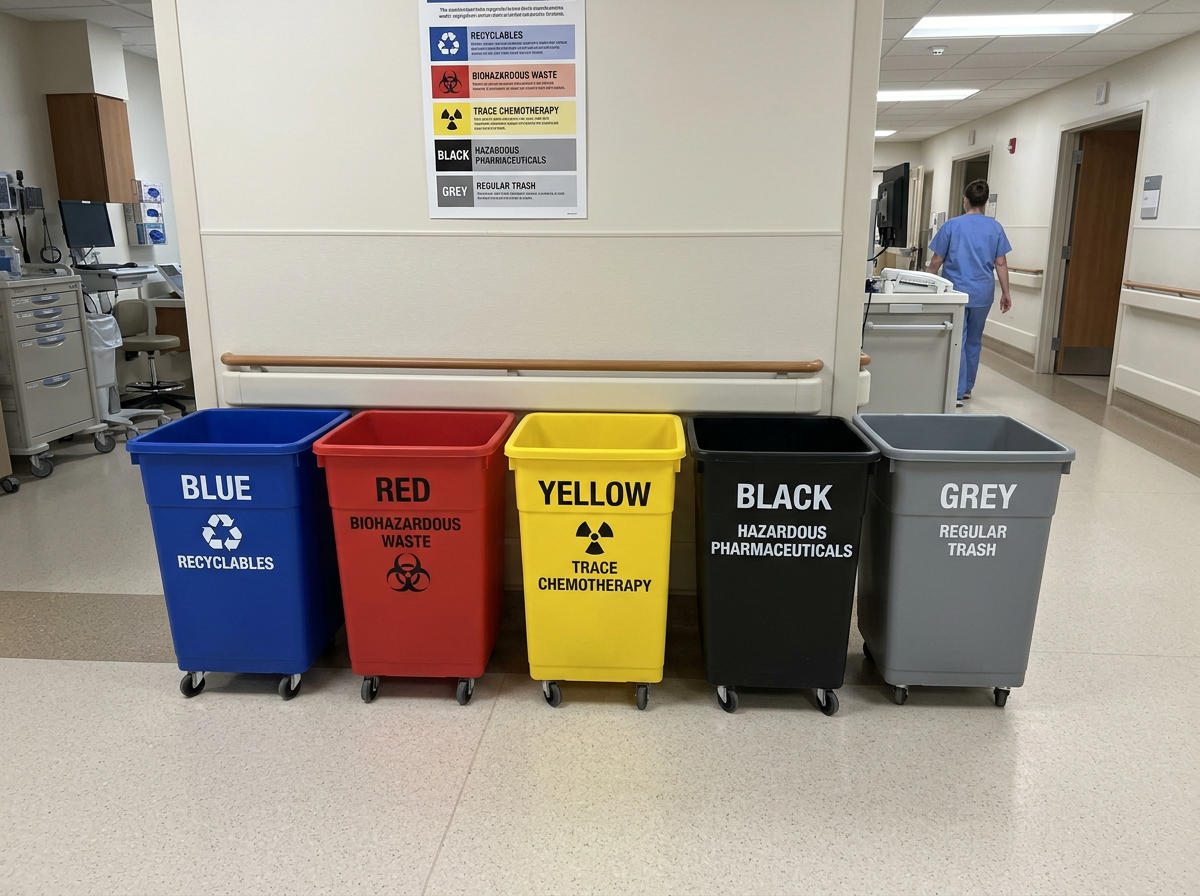
Effective pharmaceutical waste management relies heavily on the proper segregation and handling of various waste streams. This includes not only the medications themselves but also the containers they come in and specialized categories like chemotherapy waste and nicotine products.
Managing Empty Containers and Delivery Devices
The management of empty pharmaceutical containers, syringes, and delivery devices is often a point of confusion. Under federal regulations, an empty container that once held a hazardous pharmaceutical is typically no longer considered hazardous waste if it meets specific criteria. For example, in Texas, 30 TAC 335.765 outlines these conditions:
- Stock Bottles and Dispensing Bottles: These are generally considered “empty” if all contents have been removed that can be emptied by common practices (e.g., pouring, pumping, aspirating), and no more than 3% by weight of the original contents remains in the container.
- Syringes: Used syringes, even those that contained hazardous pharmaceuticals, are typically managed as medical waste (sharps) rather than hazardous waste, provided they are “empty” (i.e., the plunger has been depressed, and no more than 3% by weight of the original contents remains).
- IV Bags: Similarly, intravenous (IV) bags that contained hazardous pharmaceuticals are considered empty if they have been drained as much as possible, and no more than 3% by weight of the original contents remains.
For P-listed (acutely hazardous) pharmaceuticals, the “empty” criterion is much stricter. A container that held a P-listed waste is only considered empty if it has been triple rinsed with a solvent capable of removing the chemical or cleaned by another method shown to achieve equivalent removal. The rinseate itself must then be managed as hazardous waste.
Chemotherapy Waste Segregation
Chemotherapy drugs are potent substances designed to kill rapidly dividing cells, making them hazardous to anyone who handles them. Proper segregation is critical:
- Trace Chemotherapy Waste: This includes items that have come into contact with chemotherapy drugs but contain less than 3% by weight of the original drug. Examples include empty IV bags and tubing, used gloves, gowns, and other visibly contaminated PPE. These are often managed as a specific type of medical waste (often incinerated) rather than RCRA hazardous waste, though state regulations can vary significantly.
- Bulk Chemotherapy Waste: This category includes items containing 3% or more by weight of the original chemotherapy drug, such as partially used vials, full IV bags, or visibly saturated PPE. Bulk chemotherapy waste is typically classified as RCRA hazardous waste (often U-listed) and must be managed according to stringent hazardous waste regulations, including manifesting and disposal at a permitted TSDF.
It’s important to distinguish between “hazardous drugs” (HDs), which are identified by organizations like the National Institute for Occupational Safety and Health (NIOSH) based on their toxicity, and “hazardous waste pharmaceuticals” (HWPs), which are defined by EPA’s RCRA regulations. While there is significant overlap, not all HDs are HWPs, and vice versa. Facilities must consult both lists and relevant state regulations for comprehensive compliance.
Nicotine Exemption and E-Cigarette Disposal
Nicotine is listed by the EPA as an acute hazardous waste (P075). However, Subpart P introduced an important exemption:
- Over-the-Counter (OTC) Nicotine Replacement Therapies (NRTs): FDA-approved OTC NRTs, such as patches, gums, and lozenges, are explicitly exempt from the P075 listing when discarded. This means they do not need to be managed as hazardous waste.
- E-Liquids and E-Cigarettes: Nicotine in e-liquids and e-cigarettes is generally subject to the P075 listing if discarded. However, there are nuances. For instance, nicotine-containing products that are legitimately recycled (e.g., through specific programs for e-cigarettes) may not be considered solid waste. Disposal guidance for e-cigarettes and vape pens often recommends designated recycling options or specific hazardous waste management due to the presence of nicotine and potentially heavy metals in batteries. Schools and small businesses, in particular, need to be aware of these specific disposal requirements.
This exemption for NRTs streamlines management for healthcare facilities while still addressing the hazardous nature of other nicotine products.
Frequently Asked Questions About Pharmaceutical Waste
Navigating the complexities of pharmaceutical waste management often leads to specific questions regarding compliance and best practices. Here, we address some of the most common inquiries.
What is the sewering ban under Subpart P?
The sewering ban, a cornerstone of the 2019 EPA Subpart P rule, explicitly prohibits healthcare facilities and reverse distributors from disposing of hazardous waste pharmaceuticals down the drain or toilet. This ban applies regardless of whether the facility is connected to a publicly owned treatment works (POTW) or a septic system. The primary reasons for this prohibition are to protect the nation’s water supply from pharmaceutical contamination and safeguard public health. Pharmaceuticals, even in trace amounts, can pass through wastewater treatment plants largely unaffected and enter rivers, lakes, and drinking water sources, potentially impacting aquatic life and human health. While the ban legally applies only to RCRA hazardous waste pharmaceuticals, the EPA strongly discourages the sewering of any pharmaceutical, hazardous or non-hazardous.
How do potentially creditable and non-creditable hazardous waste pharmaceuticals differ?
The distinction between potentially creditable and non-creditable hazardous waste pharmaceuticals is central to Subpart P’s approach to reverse logistics:
- Potentially Creditable Hazardous Waste Pharmaceuticals: These are hazardous waste pharmaceuticals that have a reasonable expectation of receiving manufacturer credit. This typically includes unused, unexpired, or minimally damaged pharmaceuticals that can be returned to the manufacturer or a reverse distributor for a refund or credit. Under Subpart P, these items are not considered RCRA hazardous waste when shipped to a reverse distributor. They are managed under specific reverse logistics provisions and do not require a hazardous waste manifest at this stage. The reverse distributor then determines if they are creditable. If deemed non-creditable by the reverse distributor, they then become hazardous waste and must be managed accordingly, including manifesting for disposal.
- Non-Creditable Hazardous Waste Pharmaceuticals: These are hazardous waste pharmaceuticals that do not have a reasonable expectation of receiving manufacturer credit. This includes expired, partially used, contaminated, or damaged pharmaceuticals that cannot be returned. These items are considered RCRA hazardous waste from the moment they are designated for disposal by the healthcare facility. They must be managed under full RCRA hazardous waste regulations, including proper segregation, storage, manifesting (using the PHRM code), and disposal at a permitted hazardous waste facility.
This distinction aims to simplify the return process for viable pharmaceuticals while ensuring strict hazardous waste management for those destined for disposal.
What are the training and recordkeeping requirements for facility personnel?
Compliance with pharmaceutical waste regulations necessitates robust training and meticulous recordkeeping:
- Personnel Training: All personnel who handle or manage hazardous waste pharmaceuticals must receive comprehensive training. This training should cover:
- Waste Identification and Segregation: How to correctly identify and segregate different types of pharmaceutical waste (e.g., hazardous vs. non-hazardous, P-listed vs. U-listed, trace vs. bulk chemotherapy).
- Safe Handling Procedures: Proper techniques for handling hazardous materials, including the use of appropriate personal protective equipment (PPE).
- Emergency Procedures: What to do in case of a spill, leak, or other emergency involving hazardous waste pharmaceuticals. This includes spill response protocols and emergency contact information.
- Container Management: Correct labeling, dating, and storage of waste containers.
- Regulatory Requirements: An understanding of relevant EPA, state, and local regulations, including Subpart P.
- DOT Training: For personnel involved in preparing hazardous waste for off-site transport, specialized DOT hazardous materials training is required, typically every three years.
- Recordkeeping: Facilities must maintain detailed records to demonstrate compliance. This includes:
- Training Records: Documentation of all personnel training, including dates, topics covered, and attendee signatures.
- Waste Determinations: Records of how each pharmaceutical waste stream was characterized (e.g., listed waste, characteristic waste, non-hazardous).
- Manifests: Copies of all hazardous waste manifests for non-creditable waste shipped off-site.
- Shipping Records for Potentially Creditable Waste: Documentation of shipments to reverse distributors, even if a manifest is not required.
- Inspection Logs: Records of regular inspections of waste storage areas.
- Emergency Response Records: Documentation of any spills or releases and the corrective actions taken.
- Notification Records: Copies of EPA Form 8700-12 or state-specific notification forms.
These records are essential for compliance audits and demonstrating due diligence in managing pharmaceutical waste.
Conclusion
Managing pharmaceutical waste, particularly in industrial settings, is a critical component of modern industrial waste management. It demands a thorough understanding of complex regulatory frameworks, meticulous operational procedures, and a commitment to environmental stewardship. The EPA’s Subpart P rule, effective since 2019, has provided a tailored and streamlined approach for healthcare facilities and reverse distributors, aiming to simplify compliance while rigorously protecting public health and the environment.
From correctly identifying hazardous waste pharmaceuticals based on RCRA lists and characteristics to adhering to strict notification, manifesting, and training requirements, every step in the process is vital. The sewering ban for hazardous waste pharmaceuticals underscores the importance of preventing contamination of our water systems, while specific guidance for empty containers, chemotherapy waste, and nicotine products highlights the need for specialized handling.
By embracing these regulations and implementing robust waste management programs, organizations can achieve regulatory compliance, mitigate significant environmental and health risks, and contribute to a safer, more sustainable future. Engaging with professional waste services can provide invaluable expertise and support in navigating these intricate requirements, ensuring that pharmaceutical waste is managed responsibly from generation to final disposal.
