

The H-1B Visa: Navigating New Challenges for Tech Professionals and Companies
Key Takeaways
- Understanding the H-1B visa process is crucial for tech professionals seeking employment in the U.S.
- Recent policy changes, including increased application fees, have significant implications for both applicants and employers.
- Staying updated on the evolving landscape helps applicants and businesses adapt and remain competitive in the global tech market.
Introduction to the H-1B Visa
The H-1B visa program provides U.S. companies with a legal avenue to employ foreign professionals in specialty occupations that require advanced technical or theoretical expertise. With strong demand for highly skilled talent, especially in the technology sector, the H-1B visa is sought after by candidates from around the globe and their prospective employers. Insightful resources such as Lighthouse HQ offer comprehensive guidance on navigating the process, requirements, and regulatory updates affecting H-1B hopefuls and sponsoring organizations.
Securing an H-1B visa is a critical step for tech professionals aiming to grow their careers in the U.S. and for employers hoping to attract the best international talent. The pathway is marked by intense competition and evolving governmental policies, making it essential for both applicants and companies to stay informed and adaptable.
Moreover, as immigration rules adjust to shifting political and economic priorities, understanding how these changes affect the tech workforce and talent pipeline has become more important than ever. New obstacles, such as increased application fees and more rigorous requirements, have emerged, disproportionately affecting smaller firms and startups.
Today, the conversation around H-1B visas is not just about eligibility and process, but also about broader workforce and innovation strategies for U.S. companies in the digital economy.
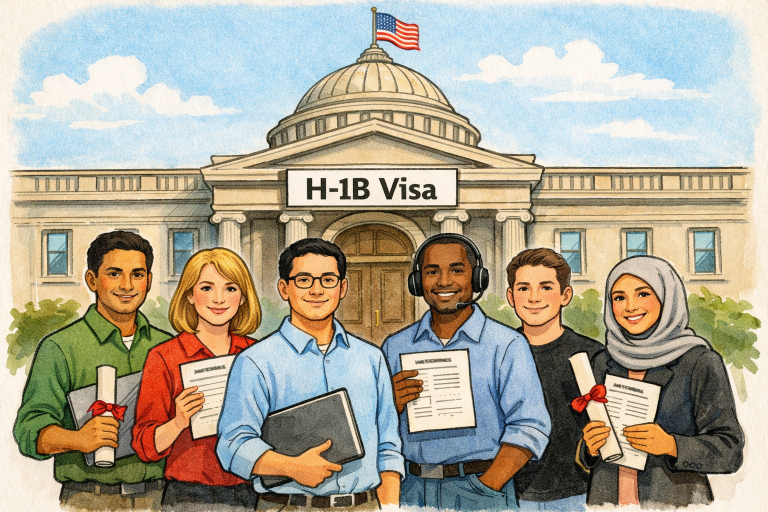
Eligibility Criteria for Applicants
For foreign nationals seeking an H-1B visa, meeting the eligibility criteria is the essential first step. Applicants must possess at least a bachelor’s degree or its equivalent in a specialized field relevant to the job. The U.S. employer must offer a role that requires theoretical or technical expertise, affirming that the position can’t be filled easily by a local candidate. Employers are also required to prove that the hiring process has not negatively impacted the wages and working conditions of similarly employed U.S. workers. Formal evaluations and equivalency, when degrees are foreign or unconventional, may also be necessary as part of the petition. For detailed background and eligibility guidance, the U.S. Citizenship and Immigration Services (USCIS) website remains a primary official source.
The Application Process
The pathway to obtaining the H-1B visa involves several distinct phases, each requiring careful attention:
- Employer Registration: U.S. employers must first register with USCIS during a narrowly defined period that usually opens in March each year.
- Lottery Selection: Due to the annual statutory cap (currently 85,000 new H-1B visas per year), USCIS conducts a random lottery if registrations exceed available slots. The lottery determines which employers can proceed with full petitions.
- Petition Filing: Once selected, employers must file a complete H-1B petition for the named beneficiary, including documentation of eligibility, a certified Labor Condition Application (LCA), and the required filing fees.
- Approval and Visa Issuance: If USCIS approves the petition, foreign professionals outside the U.S. can seek visa stamping at a U.S. consulate. Those already in the U.S. may adjust their status directly.
Given high demand and frequent regulatory changes, staying organized and acting promptly during every step is key to a successful H-1B application outcome.
Recent Policy Changes and Their Impact
In September 2025, a major policy update dramatically increased the cost of H-1B visa applications, introducing a $100,000 application fee for new cases. This change, as reported by TechTarget, is expected to alter the competitive balance in the tech industry. The new fee imposes a financial barrier that could shut out smaller companies and startups from hiring critical talent, while larger companies with deeper resources may face less disruption.
The shift has sparked widespread concern about maintaining innovation and entrepreneurship in the U.S. tech market, and many voices in the sector have called for greater flexibility and predictability in the visa process. In addition, the elevated costs may push companies to explore different strategies for meeting their workforce needs, from focusing on domestic recruitment to leveraging remote talent pools abroad.
Challenges Faced by Startups
Startups, which rely extensively on specialized talent to innovate and compete, are especially vulnerable to fee hikes and compliance costs associated with the H-1B program. According to a recent CNBC analysis, increased financial pressures are already deterring smaller firms from sponsoring international employees, thereby reducing their competitiveness against established tech giants. This dynamic threatens to slow down the pace of innovation traditionally driven by agile, venture-backed startups. Access to new funding or partnerships could become critical for startups aiming to build global teams under the new fee structures.
Strategies for Navigating the New Landscape
Tech companies and professionals must now explore alternative strategies to secure the talent they need amid the evolving visa environment. These include:
- Exploring Alternative Visa Options: Companies should research other U.S. work visa categories, such as the O-1 visa for individuals with extraordinary ability or the L-1 visa for intracompany transfers, which may have different eligibility criteria and lower associated costs.
- Investing in Domestic Talent: Prioritizing upskilling, retraining, and professional development of U.S.-based employees through targeted training programs can help address the skills gap while reducing reliance on costly visa processes.
- Remote Work Solutions: By leveraging remote collaboration technologies, companies can access a global workforce, enabling qualified professionals to contribute from their home countries without the complexities of U.S. immigration bureaucracy. This approach is already popular among distributed tech firms and has seen accelerated adoption since the pandemic.
Combining these strategies can help companies remain resilient and innovative as they navigate this new era of immigration policies and workforce planning. For additional resources on workforce transformation and international mobility options, consider visiting the Forbes Human Resources Council.
Conclusion
The H-1B visa remains a vital pathway for international tech professionals and U.S. companies seeking to attract top-tier talent. However, recent policy updates and fee increases have placed new constraints on the process, disproportionately affecting startups and smaller firms. To thrive amid these changes, applicants and businesses must adopt proactive, flexible approaches to talent acquisition and workforce planning. By staying informed and considering alternative recruitment strategies, the industry can weather the changes and continue to drive innovation, growth, and competitiveness in the global tech landscape.
