

Symbolic Traditions: The Role of Police Challenge Coins in Building Community
Table of Contents
- Introduction
- Origins of Police Challenge Coins
- Design and Symbolism
- Fostering Internal Camaraderie
- Community Engagement and Recognition
- Commemorating Heroic Deeds
- Fundraising and Charitable Initiatives
- Collecting and Trading Challenge Coins
- Conclusion
Across generations, police challenge coins have held a unique place in the culture of law enforcement. More than just collectibles for officers, these coins are rich with symbolism, representing achievements, unity, and the enduring bond between police and the communities they protect. The tradition of police challenge coins illustrates how small tokens can reflect the values, history, and aspirations of entire departments and towns.
While challenge coins are cherished among officers, their role extends far beyond internal recognition. Community members, local leaders, and even youth participants interact with police through special coin initiatives, demonstrating how tradition can foster mutual respect and understanding. From commemorating acts of valor to supporting local causes, these medallions are a testament to partnership and public trust.
Origins of Police Challenge Coins
The heritage of challenge coins is rooted in military history. First gaining prominence during World War I, American soldiers used these coins as markers of loyalty and camaraderie within their units. When servicemen and women returned to civilian life and entered police work, they brought this tradition with them. Over time, police departments adopted challenge coins, adapting symbols and rituals to their new environment while retaining the spirit of unity and honor that defined their original use. This enduring tradition helps bridge the values of military service and civilian protection.
Design and Symbolism
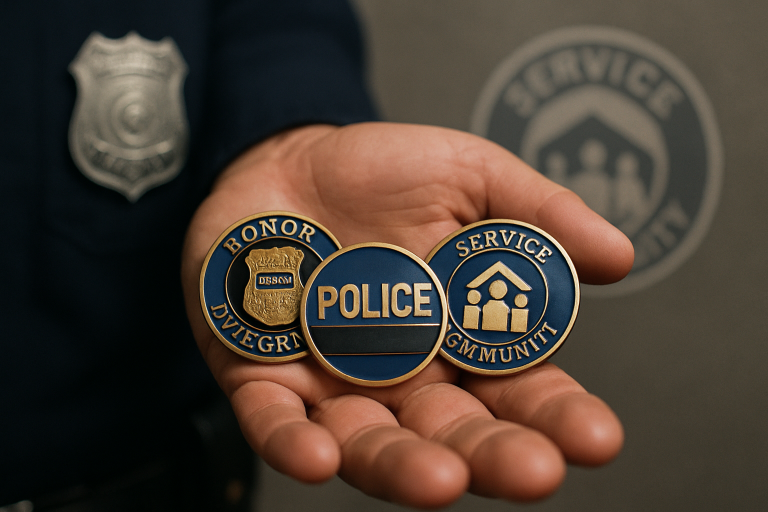
Each police challenge coin is a product of careful design. Departments often select materials like brass, nickel, or zinc, ensuring durability and a sense of prestige. The coins feature insignias, mottos, and local symbols unique to their units—from the city skyline to the iconic “thin blue line” that stands for law enforcement’s daily dedication. These visual details make each coin a unique artifact, encapsulating a department’s mission and history. The aesthetics of policing and public service are intricately woven into every piece, turning coins into both keepsakes and tools for storytelling.
Fostering Internal Camaraderie
Within police ranks, challenge coins serve as more than decorations. They are awarded to officers in recognition of exceptional service, completion of specialized training, or acts of courage in the field. Many departments have established rituals for presenting coins—a handshake, a quiet word of thanks, or the unmistakable weight of the coin passed from hand to hand. These ceremonies help foster a culture of pride and solidarity, reinforcing the sense of brotherhood and shared responsibility that is vital to law enforcement’s success. Social bonds are further deepened as officers sometimes exchange coins among themselves, strengthening relationships across different units and generations.
Community Engagement and Recognition
The impact of police challenge coins is increasingly seen in civilian outreach. Departments distribute coins not only to officers but also to citizens who have played key roles in local safety, education, or partnership efforts. Notable programs have seen coins given to community leaders, volunteers, and children taking part in safety workshops. For example, when a police department in Indiana launched the “Community Guardian” challenge coin, it was used as a tool for acknowledging positive engagement, helping drive community satisfaction higher, and creating new dialogue between officers and residents. Such efforts underscore the significance of meaningful recognition in breaking down barriers and fostering lasting relationships.
Commemorating Heroic Deeds
Another solemn use for challenge coins is the honoring of fallen officers. Departments issue commemorative editions inscribed with the names and badge numbers of those who have made the ultimate sacrifice. These coins serve as lasting tributes, offering bereaved families a tangible link to their loved one’s legacy and sacrifice. According to statistics shared by national memorial organizations, thousands of these coins circulate annually, comforting survivors and reminding communities of the bravery and commitment shown by their police officers.
Fundraising and Charitable Initiatives
Special edition challenge coins are increasingly used as fundraising and support tools. Departments design limited-run coins for causes such as youth safety, mental health awareness, and support for families of law enforcement officers. Sales of these coins often exceed targets, enabling the introduction of new community programs and services. For example, the creation and sale of a “Community Partner” coin allowed one department to fully fund a youth safety education initiative within just a few months, demonstrating how tradition and philanthropy can go hand in hand.
Collecting and Trading Challenge Coins
Challenge coins have also sparked a vibrant collector culture within and outside the law enforcement community. Police and public safety events often feature coin swaps and displays, where collectors trade and learn about the unique history behind each coin. These exchanges foster connections, preserve stories, and serve as a meaningful nod to the shared history of police work across different regions and generations. The culture of trading helps strengthen the sense of unity, not just within departments, but among public safety communities nationwide.
Conclusion
Police challenge coins are more than commemorative tokens; they are dynamic instruments of unity, recognition, and community partnership. As their designs and uses have evolved, so too has their capacity to inspire trust, celebrate heroism, and fund grassroots change. Through these symbolic medallions, police departments continue to honor tradition while building bridges with the communities they serve.
