

The High-Stakes Pursuit: Navigating the Frontlines of Specialized Medicine
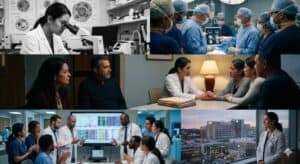
When you decide to pursue oncology, you are not simply selecting a medical specialty; you are committing to a life spent at the intersection of science, compassion, and uncertainty. From the moment you declare your intentions in medical school, you signal something to the world: that you are willing to sit with suffering, to fight for incremental victories, and to carry the weight of outcomes that no physician fully controls. It is a choice that demands everything from you, and it begins long before you ever treat your first patient.
The Years That Shape You
Your journey into a career as an oncologist starts with the foundational grind every physician endures: four years of medical school, followed by a three-year internal medicine residency, but you are only at the threshold. After residency, you pursue a fellowship specifically in oncology, typically running two to three years, where your education sharpens into something focused and formidable. You learn to read scans the way a detective reads a crime scene. You study tumor biology, chemotherapy protocols, immunotherapy mechanisms, and the fine art of clinical trial enrollment. You are not just learning medicine; you are learning a language that most people will never speak, one written in pathology reports and survival curves.
The Emotional Architecture of the Work
Nobody warns you adequately about the emotional infrastructure you will need to build. You will lose patients, not occasionally, but regularly. You will deliver news that reshapes families in an instant. You will sit across from a 38-year-old parent and explain recurrence. What sustains you is not detachment, but a disciplined form of presence: the ability to feel deeply without being consumed. You develop what colleagues sometimes call compassionate resilience — a capacity to grieve privately, advocate fiercely, and return to the next room with clarity. This is not something a textbook teaches you. It accumulates through experience, mentorship, and deliberate self-reflection.
The Science That Pulls You Forward
What keeps oncology intellectually electrifying is the pace of discovery. You enter a field that has been transformed in the last two decades by targeted therapies, CAR-T cell treatments, checkpoint inhibitors, and precision genomics. When you specialize further, in breast oncology, hematologic malignancies, thoracic tumors, or pediatric cancers, you step into a microworld of evolving protocols and clinical trials. You are not merely applying settled knowledge; you are participating in its creation. Many oncologists describe the field as one where the goalpost moves constantly, and rather than finding that exhausting, they find it galvanizing. You will likely feel the same.
Building Your Niche
As you advance in your training, you begin to discover what kind of oncologist you want to be. Some physicians are drawn to the laboratory, where they bridge clinical practice with translational research. Others build their careers around patient-centered care in community hospitals, bringing cutting-edge treatment to underserved populations. Some pursue academic medicine, training the next generation while advancing the frontier. Your niche is not handed to you; you excavate it through curiosity, mentorship, and honest self-assessment of where your strengths and passions converge.
Ultimately, choosing oncology means choosing to matter in the hardest possible moments of a person’s life. Your presence in the room carries weight. Your expertise offers hope where confusion once lived. Yes, the road is long, the training is punishing, and the emotional toll is real, but you will rarely wonder whether your work is meaningful. In oncology, that question answers itself every single day.
